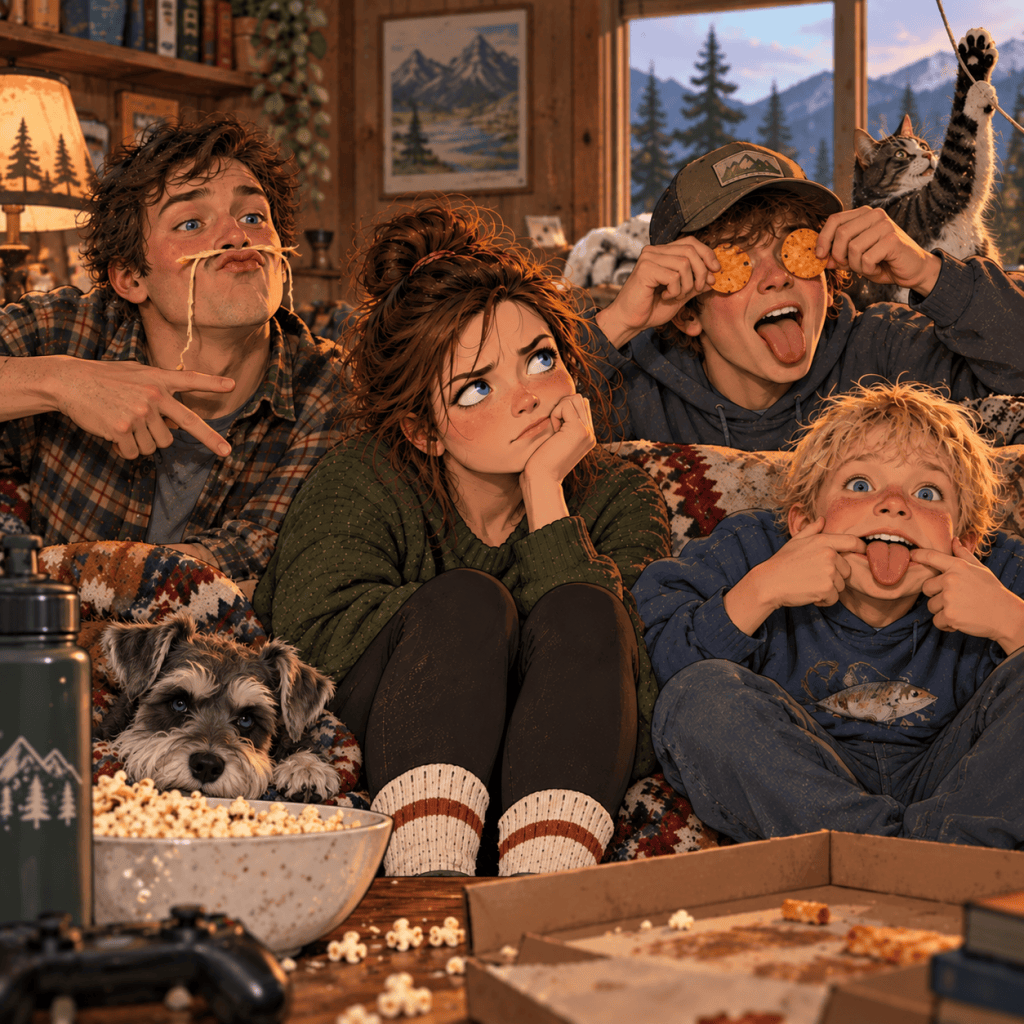
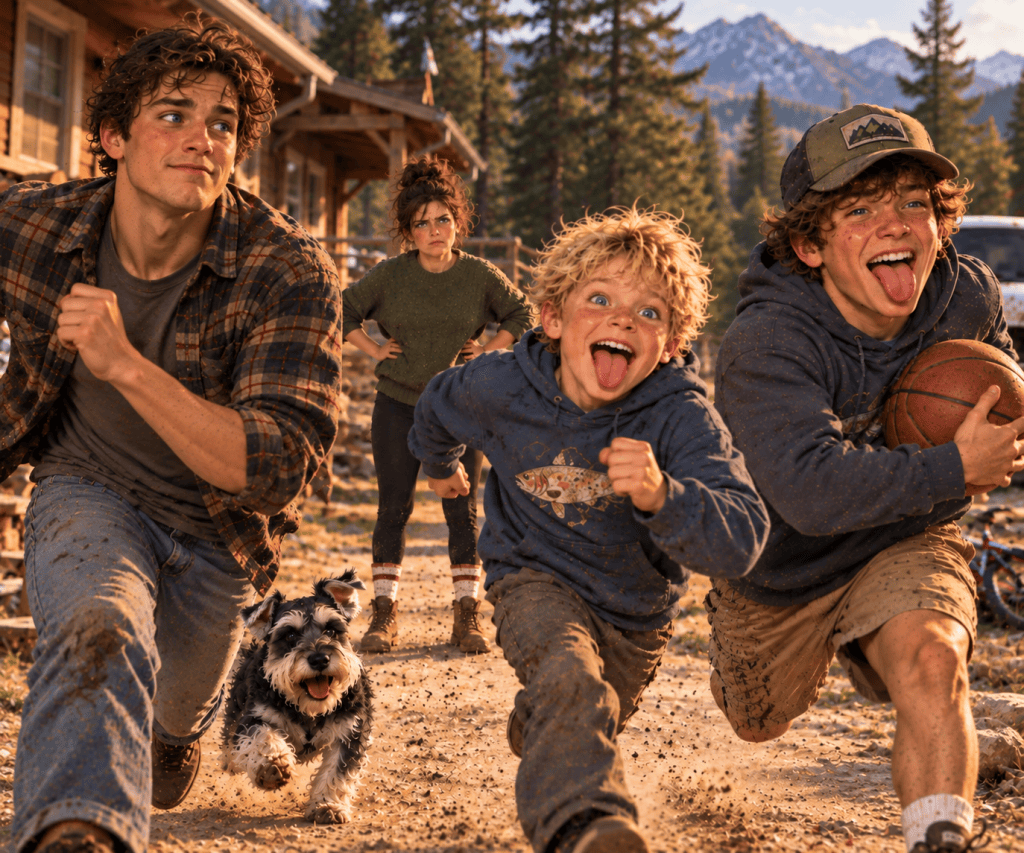
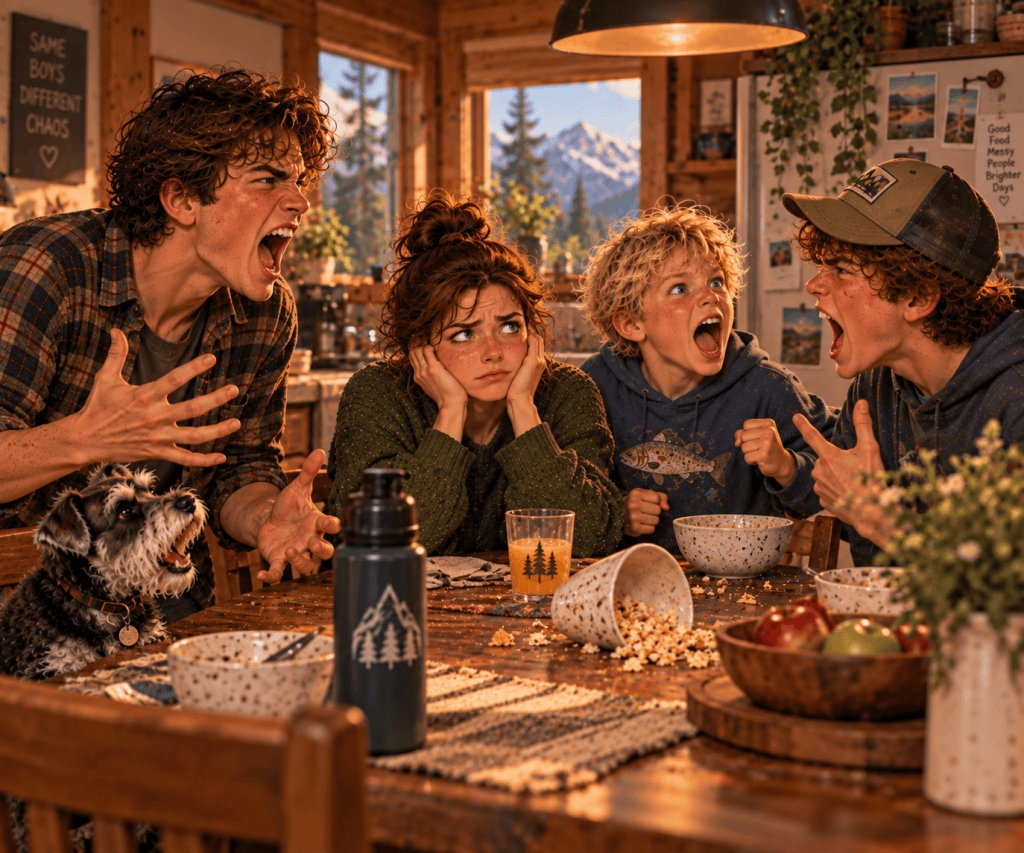
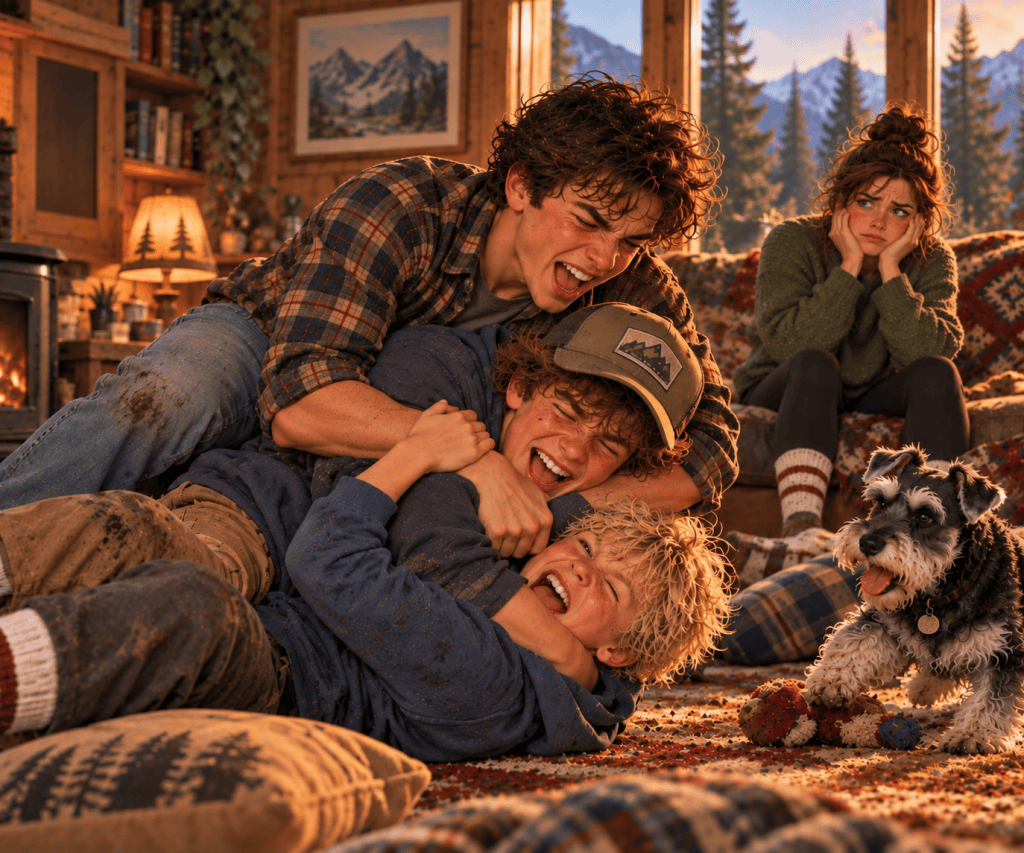
The Cabin That Should Have Stayed in the 1920s

*Fair warning: While hilarious, this story is not for the faint of heart (or stomach). Therefore, proceed at your own psychological risk.*

Let us begin.
In early November of 2019, I went to visit my friend, Maren, a park ranger and police officer in Yellowstone National Park. We’d been friends since the beginning of high school, which meant we had accumulated enough years of shared history to know better than to question each other’s judgment.

Or so I thought.
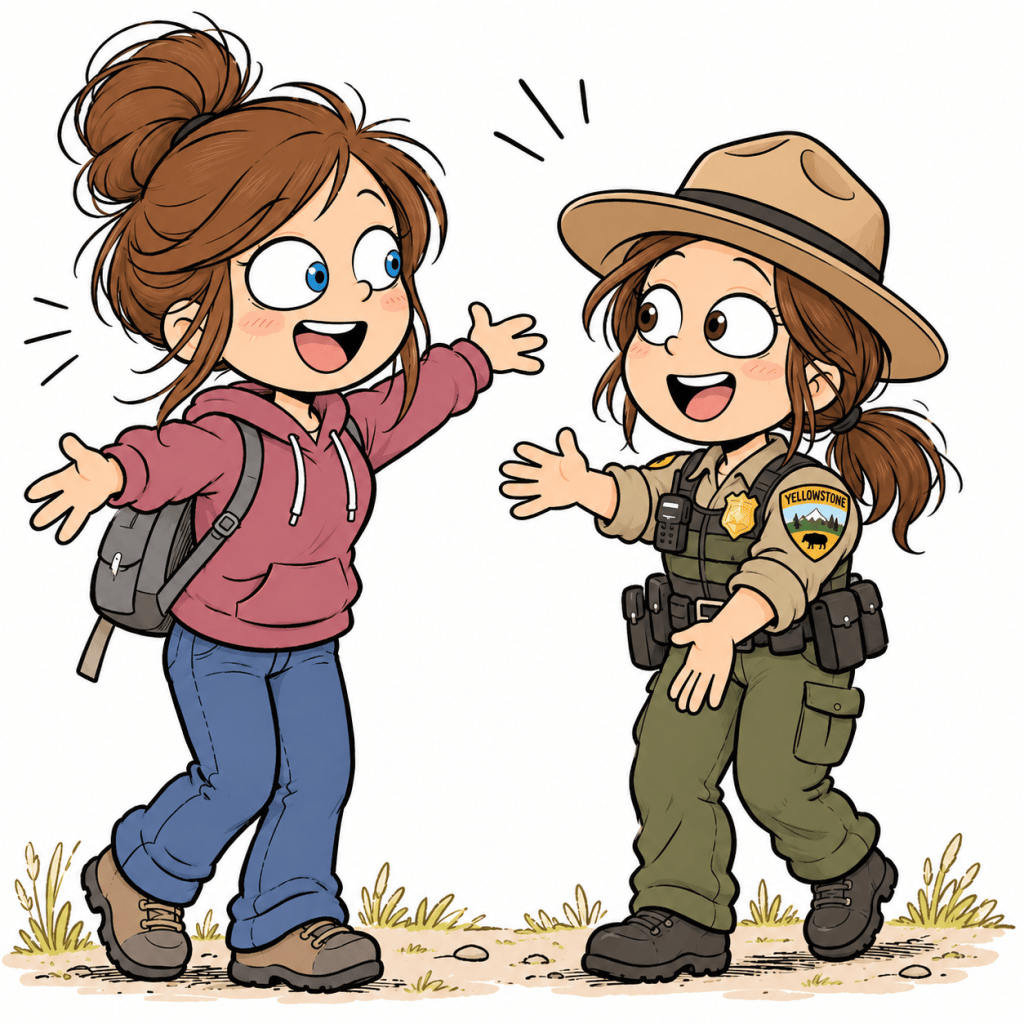
At the time, Maren’s daughter was four, and Maren’s brother, known to everyone as Chip, was living with them. One morning, Maren stated that we should hike into the park and spend the night in an old backcountry patrol cabin built sometime in the 1920s.
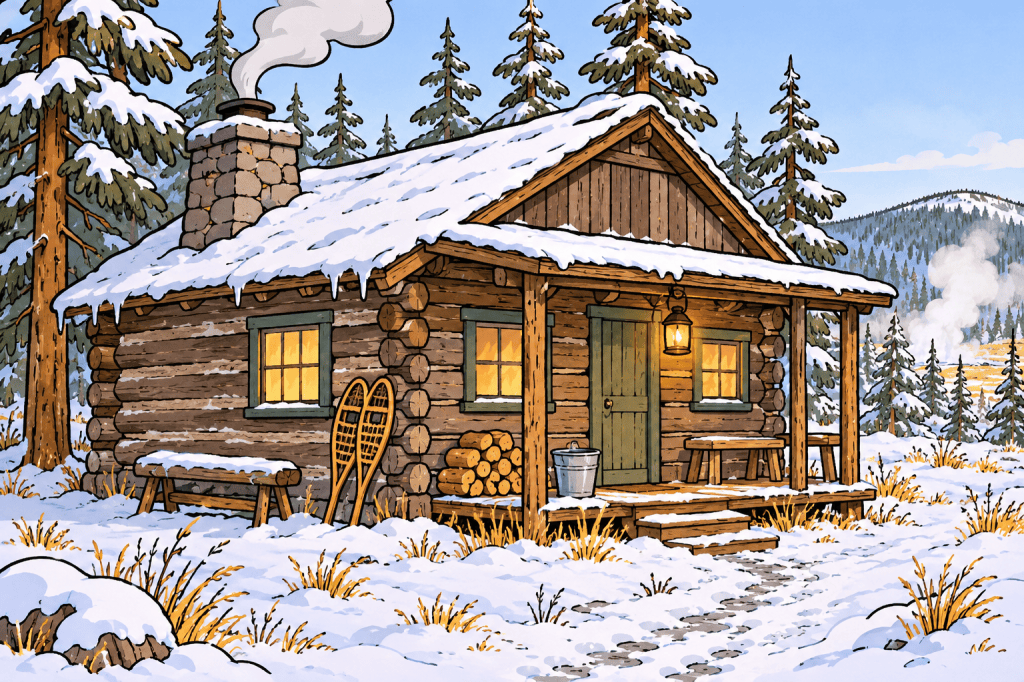
“It’ll be fun,” she said.

Famous last words.

So, we packed up.

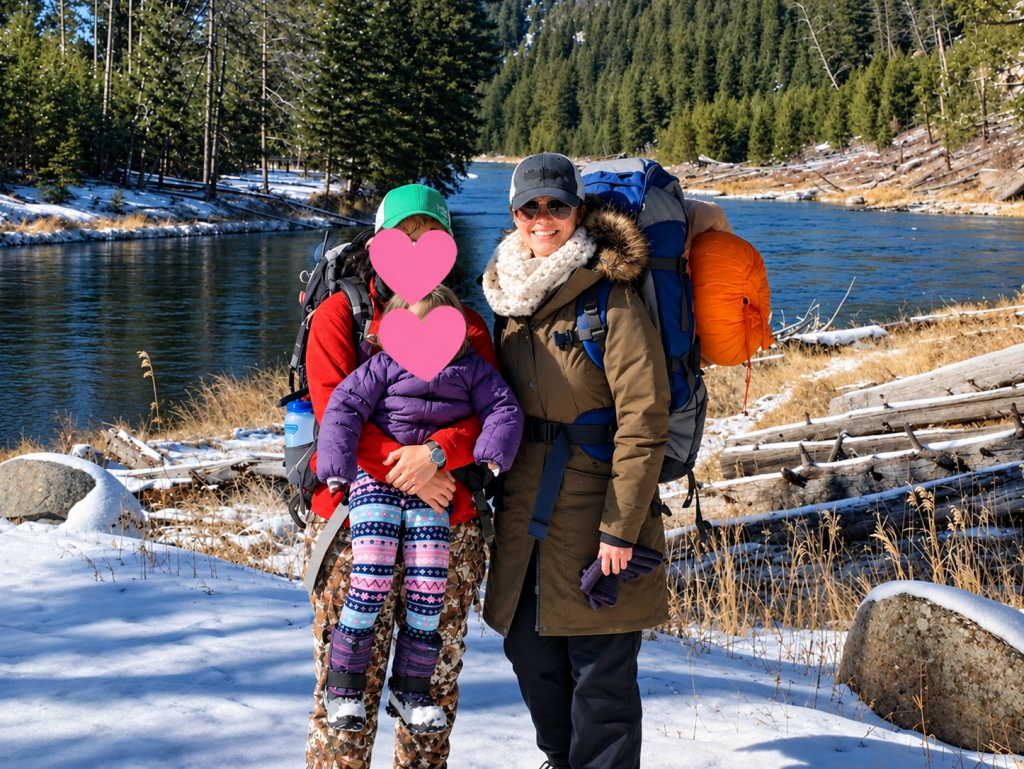
Maren, Chip, her daughter, and I shouldered our packs and started hiking.
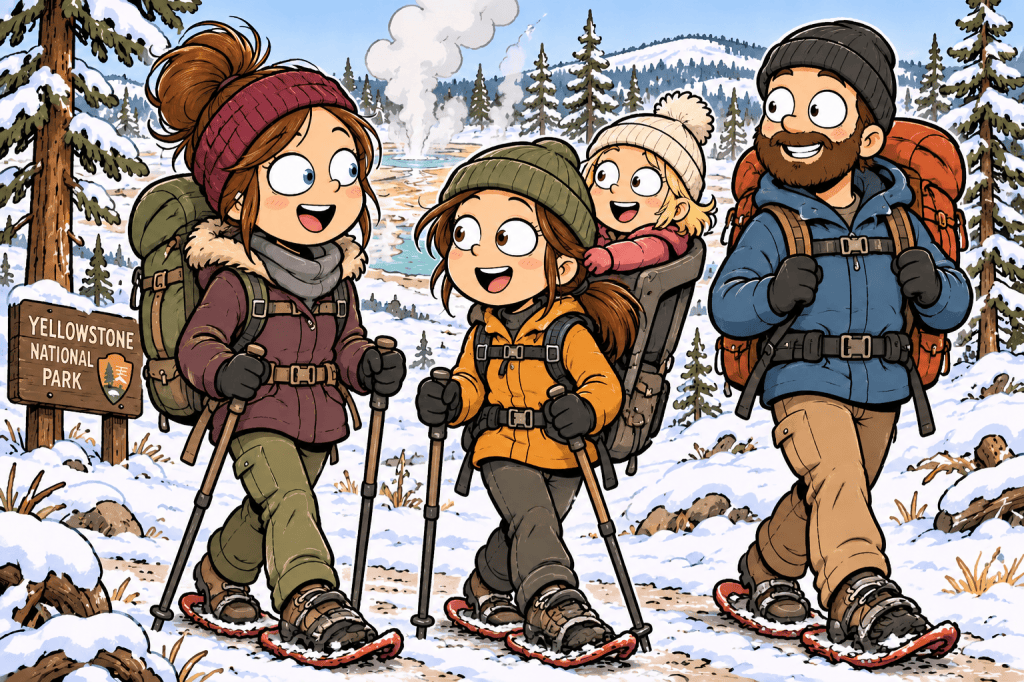
“It’s only about four miles,” Maren explained, in the tone of someone describing a trip to the mailbox.

Four miles is a modest distance under normal conditions. Four miles through snowdrifts two or three feet deep is a different unit of measurement entirely. It really should be measured in sighs, damp socks, and the number of times you begin to wonder if your friend has misread the map.
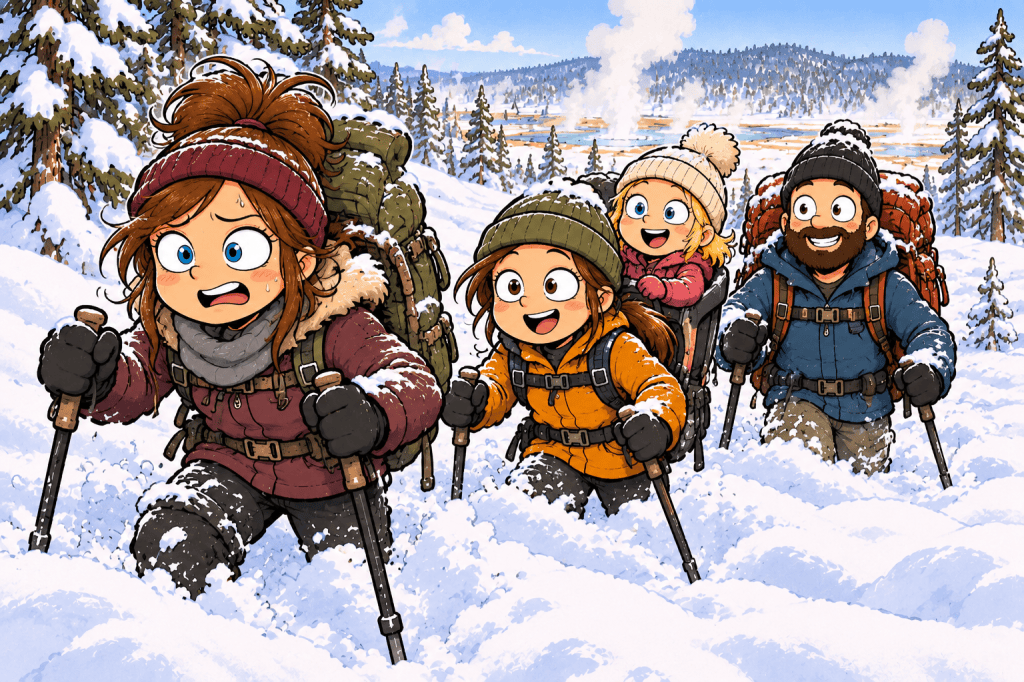
At first, it was lovely. The sun was out. The sky was a bright, uncomplicated blue. Maren had her GPS, and we wandered deeper into the park with the confidence of people who had not yet noticed the sun moving toward the horizon.

We trudged along. The scenery was beautiful. The snow was picturesque. The company was good. I was having a nice time in the way people have a nice time when they still believe the cabin is where someone said it would be.
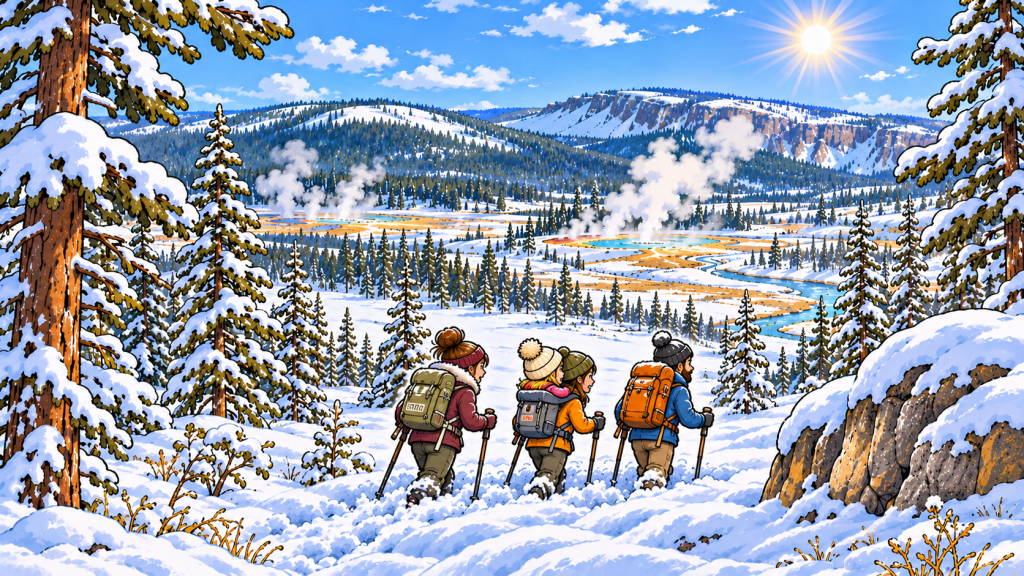
Then the day began to change its mind.

The sun stretched lower across the sky. The temperature dropped. The wind picked up. The cabin was nowhere in sight.
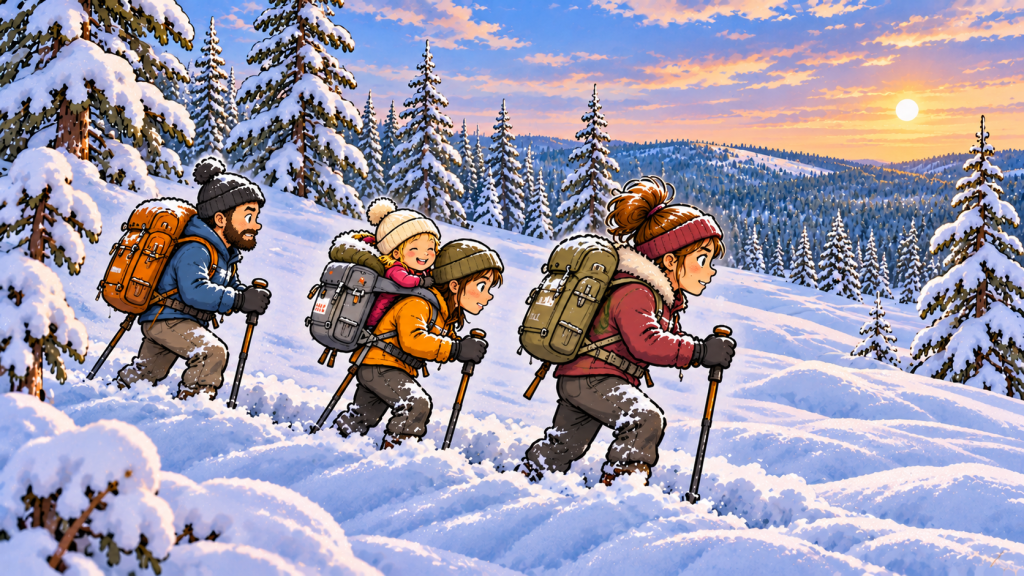
I began to panic quietly.
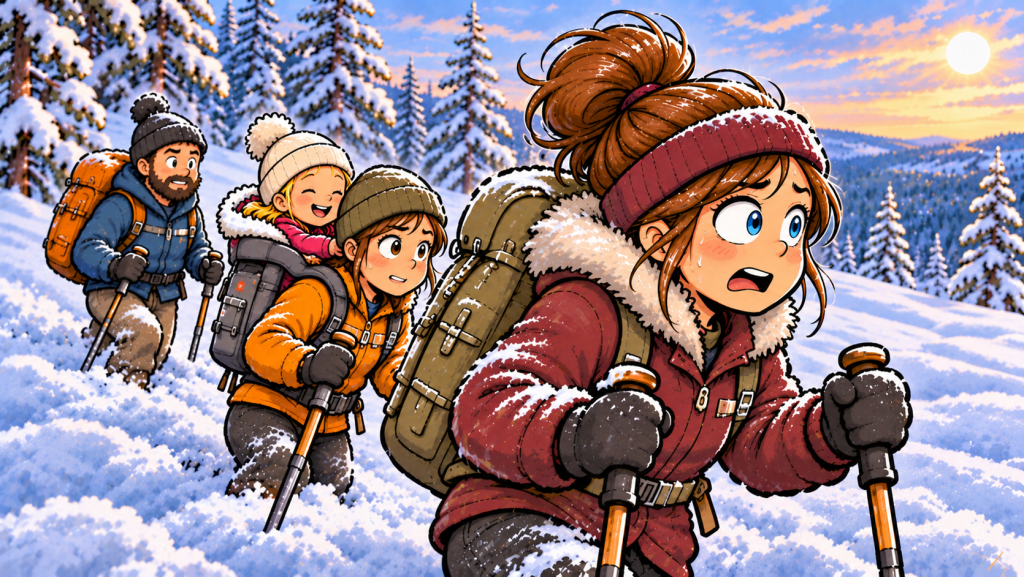
Then I upgraded to a more visible panic.
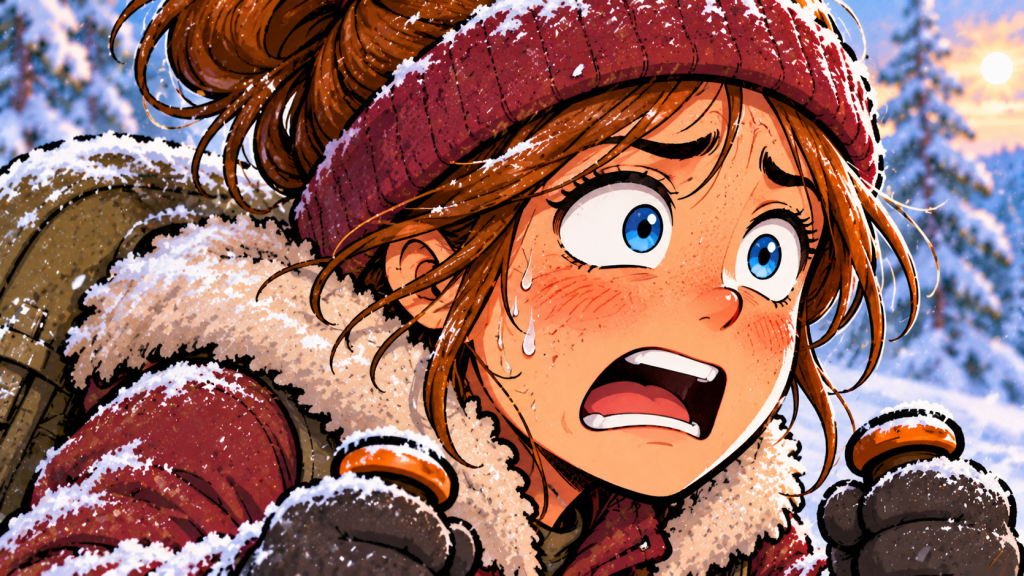
Maren gently reassured me that we would reach the cabin before sunset. I appreciated the reassurance. I also thought she might be wrong. The nonexistent trail continued to produce snowdrift bends and hills that were apparently “just over the next hill” kind of hills.

I had begun to suspect the cabin was a philosophical concept rather than an actual building.

But eventually, and thankfully, it appeared.
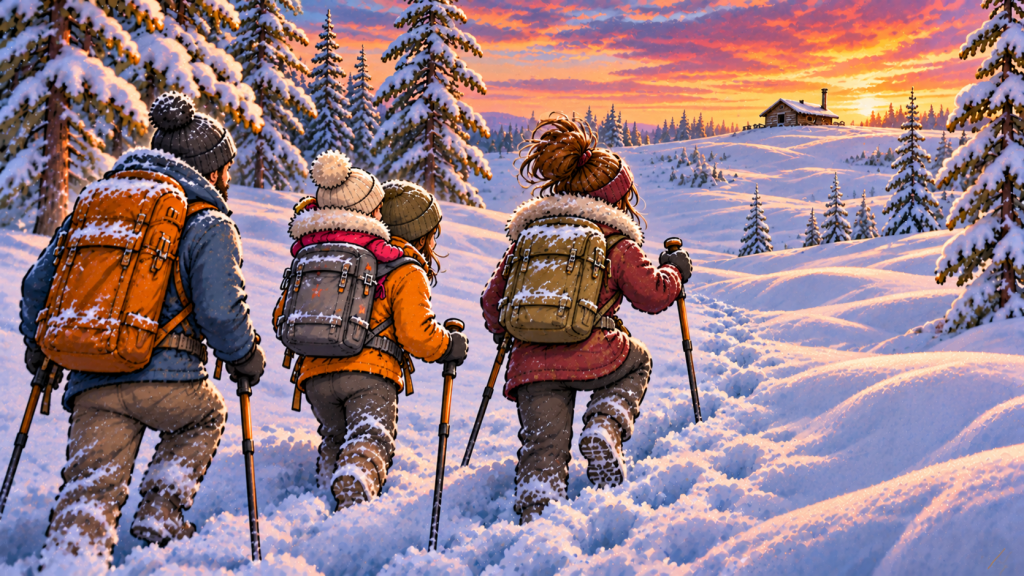
The relief was immediate and profound. We had made it.

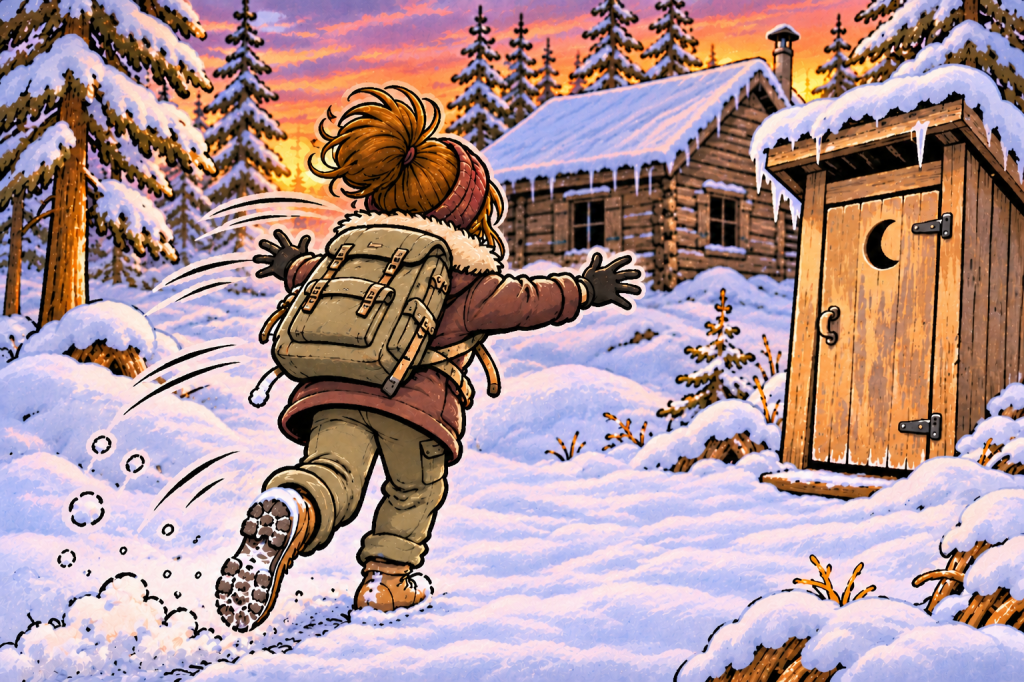
The temperature was dropping fast, and I needed to pee, so I took in the cabin’s historic features with particular appreciation. It had an outhouse about 30 feet away.

Which was very dark and very cold.
The cabin itself had a cast-iron stove. Heat, apparently, was something you had to negotiate with the stove by building a fire and then hoping it found the arrangement satisfactory.
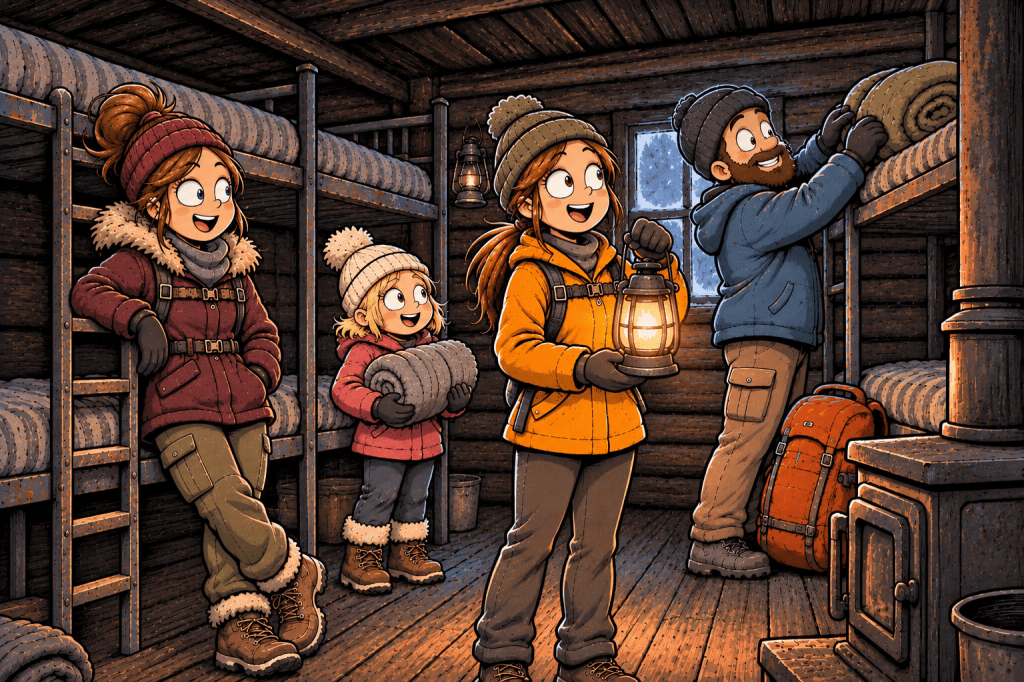
Maren went straight to work getting the fire going. We started preparing dinner: steak, eggs, and potatoes. It was an excellent meal, particularly under the circumstances.
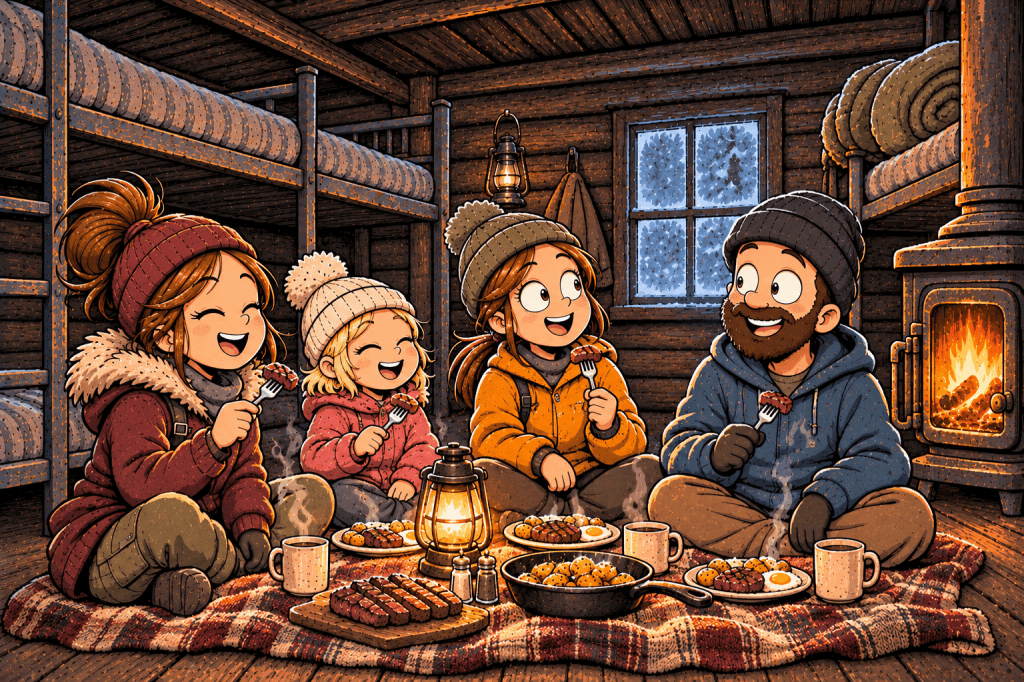
Outside, the temperature kept falling until it reached twenty below zero. Inside, the little stove made a brave attempt to heat the cabin and seemed to warm one or two square feet near itself quite well.
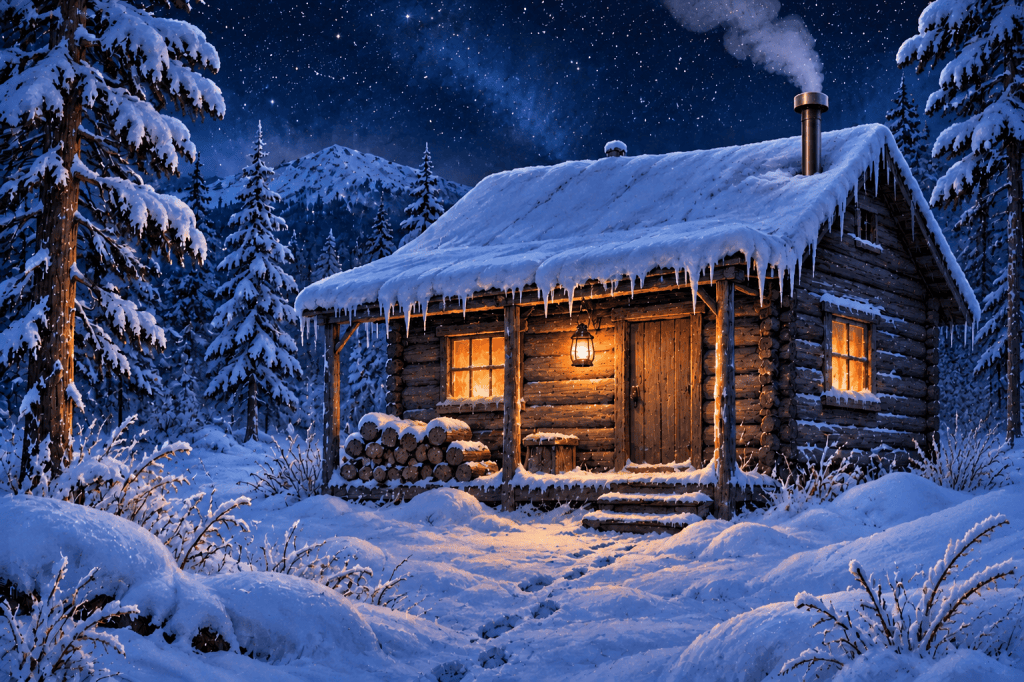
Chip and I helped entertain Maren’s daughter as we cleaned up dinner and huddled close for warmth. The cabin remained relatively cold. I began to think longingly of my sleeping bag, which was the only place I wanted to be and, ideally, the only place I wanted to remain until spring.

Along the walls were bunk beds with springs and mattresses that looked as if they had been selected by a prison committee. I took one of the bottom bunks. Chip took the top.

Maren held up a lantern and checked that everyone was ready for sleep.
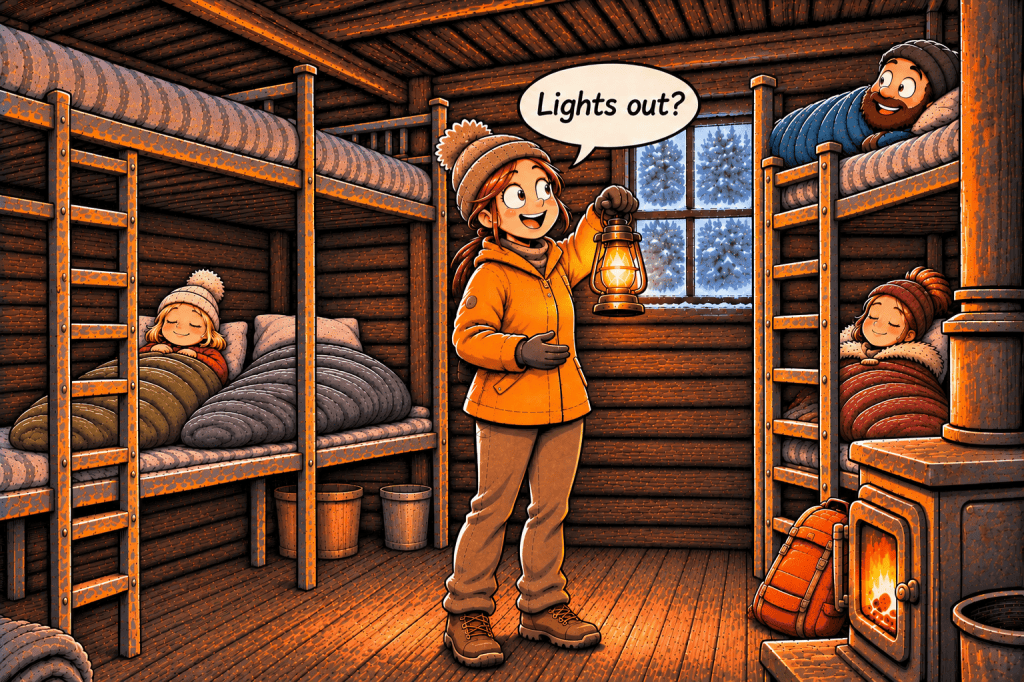
Then Chip said, “I’m going to throw up.”

Maren moved fast and grabbed a bowl.
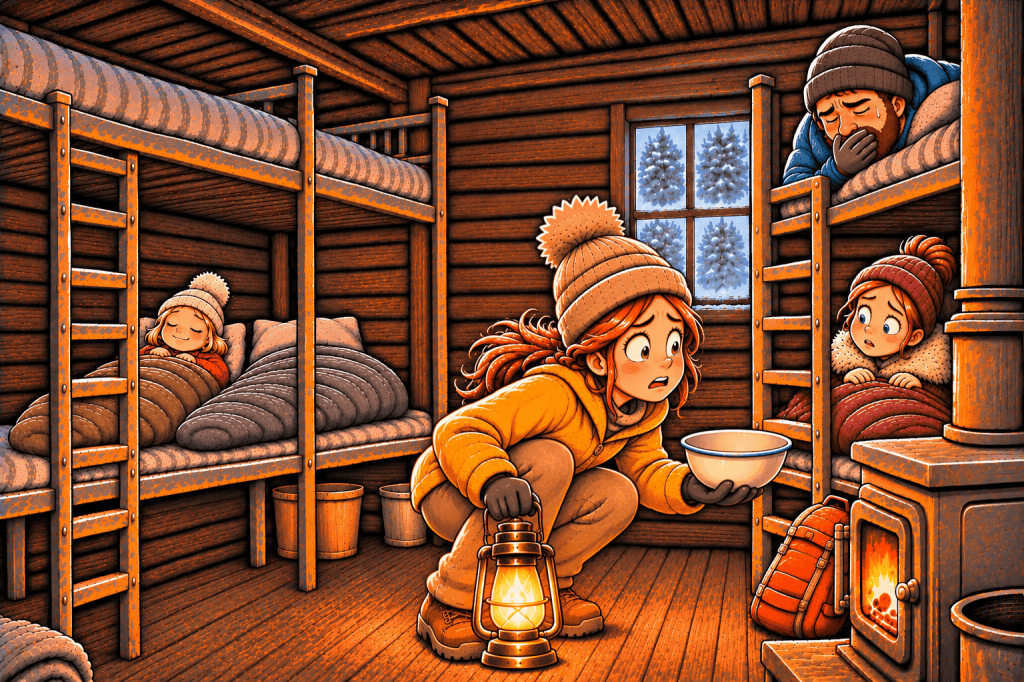
I will never forget watching her face descend into a twisted state of horror.
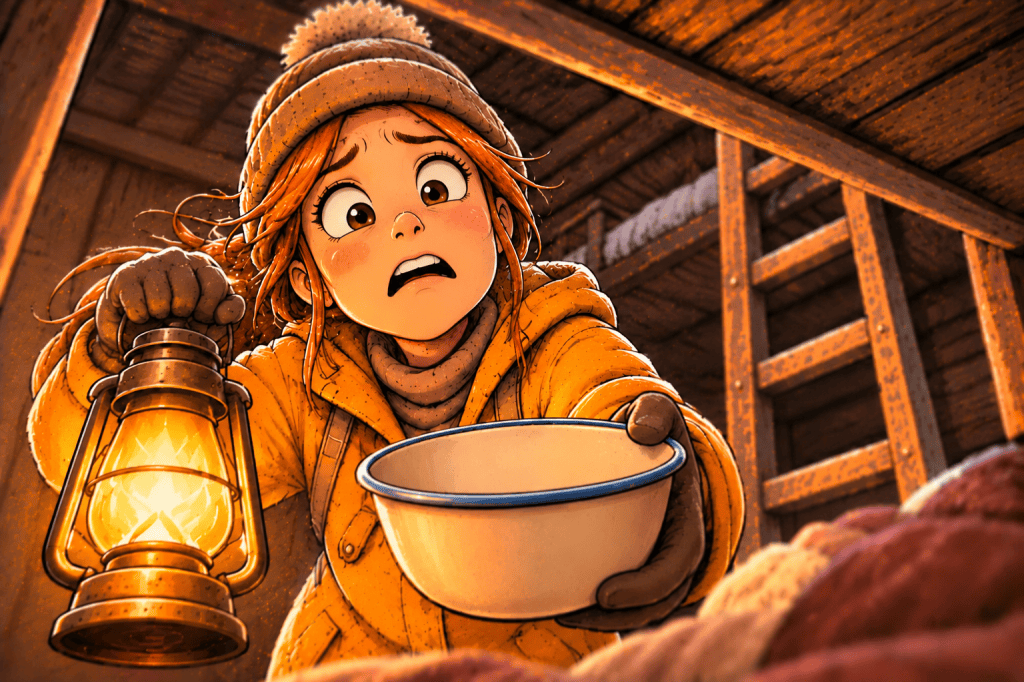
Her arm was fully extended. The bowl attempting to reach him. But it never made it.
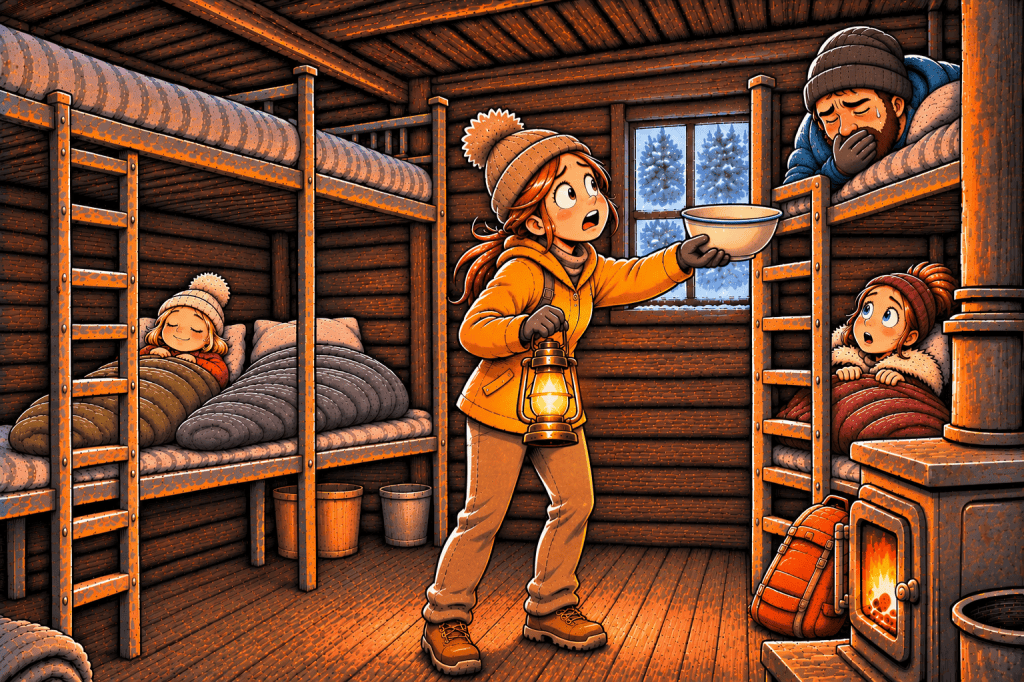
When I say it was a cascade, I mean it in the technical sense.

The vomit traveled all the way across the cabin and missed the bowl almost entirely.

It showered Maren.

It showered the beds.

It showered the floor.

It covered me.

It reached places in the cabin that had previously been considered outside the range of ordinary participation.
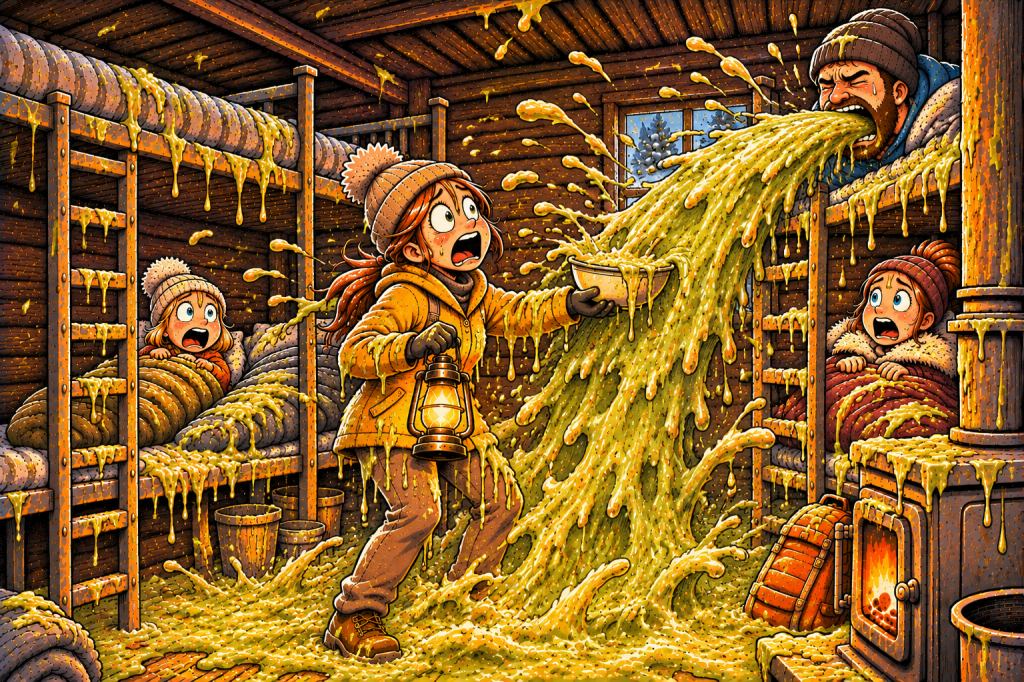
For one brief moment, everyone was silent.
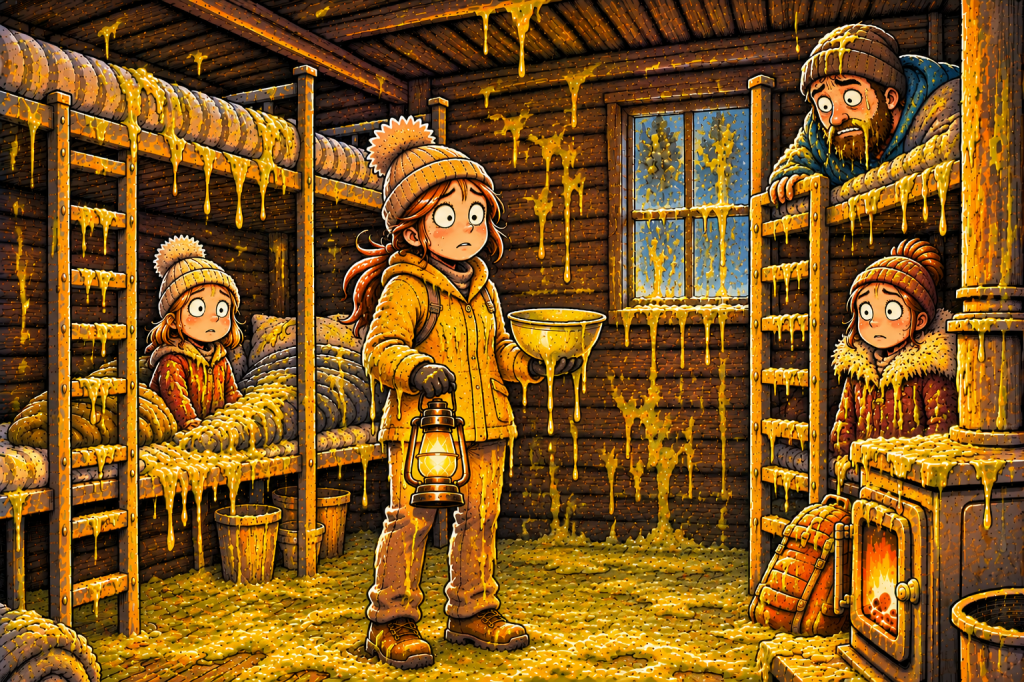
Then Maren said, “Well. Goodnight.”

She climbed into bed with her daughter and turned off the light.

I lay on the bottom bunk, cold, covered in vomit, and trying to process the fact that the cabin had somehow exploded.
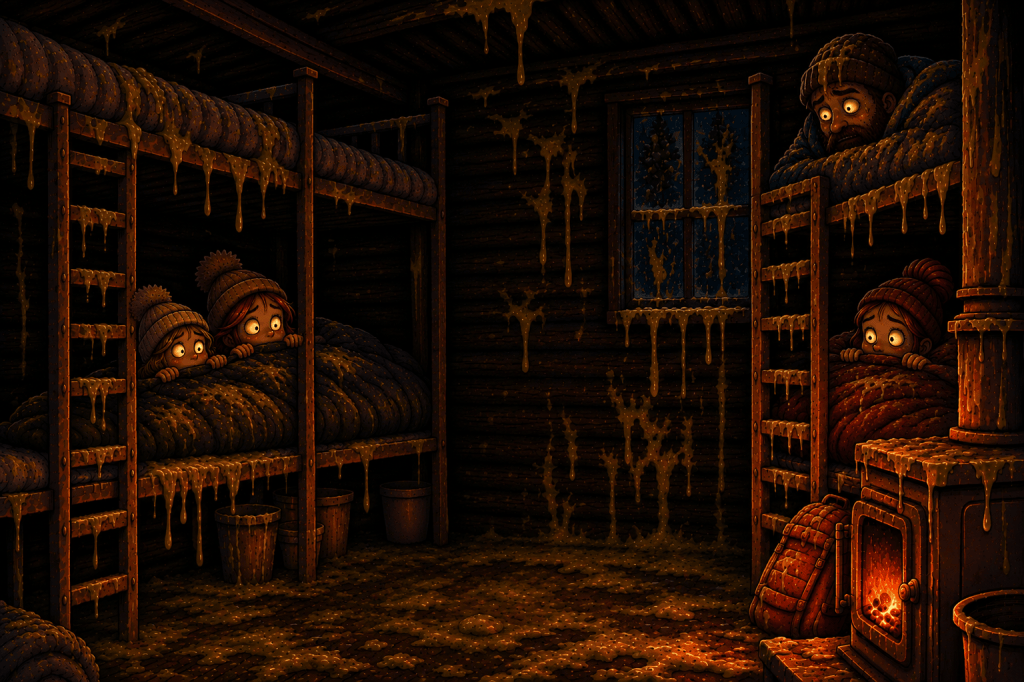
The smell was astonishing.

The temperature was appalling.

My sleeping bag had gone from desirable to spiritually necessary.

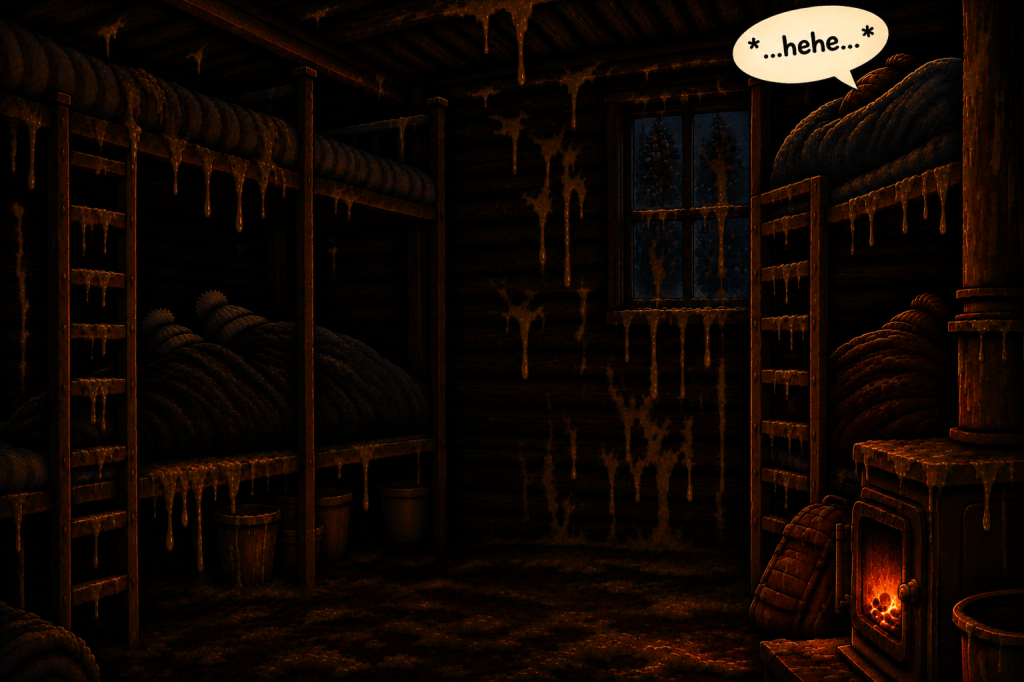
About thirty minutes later, in the dark, I heard Chip giggling quietly to himself from the top bunk.
I’m fairly certain I did not sleep.

The night was long and cold and smelled like the worst decision any of us had ever made.

Dawn, when it finally arrived, was a welcome sight.
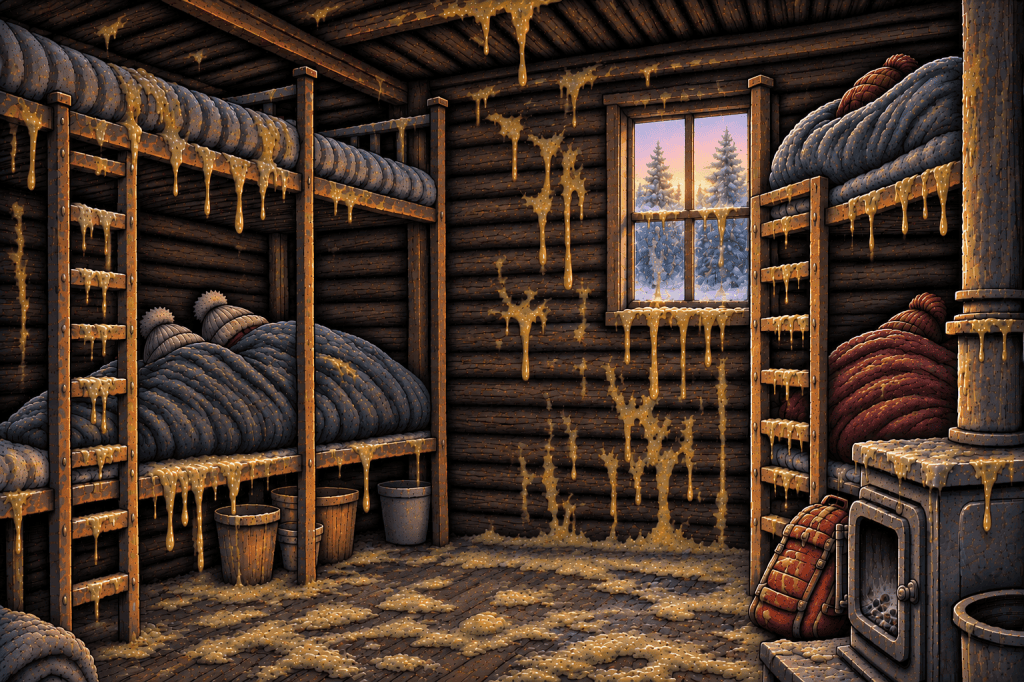
We got up and quietly cleaned the cabin as best we could.

There was limited discussion of the previous evening. The mess was simply there, and so were we, and the dust bin had become a strong member of the team.

It was still bitterly cold as we attempted to make breakfast.
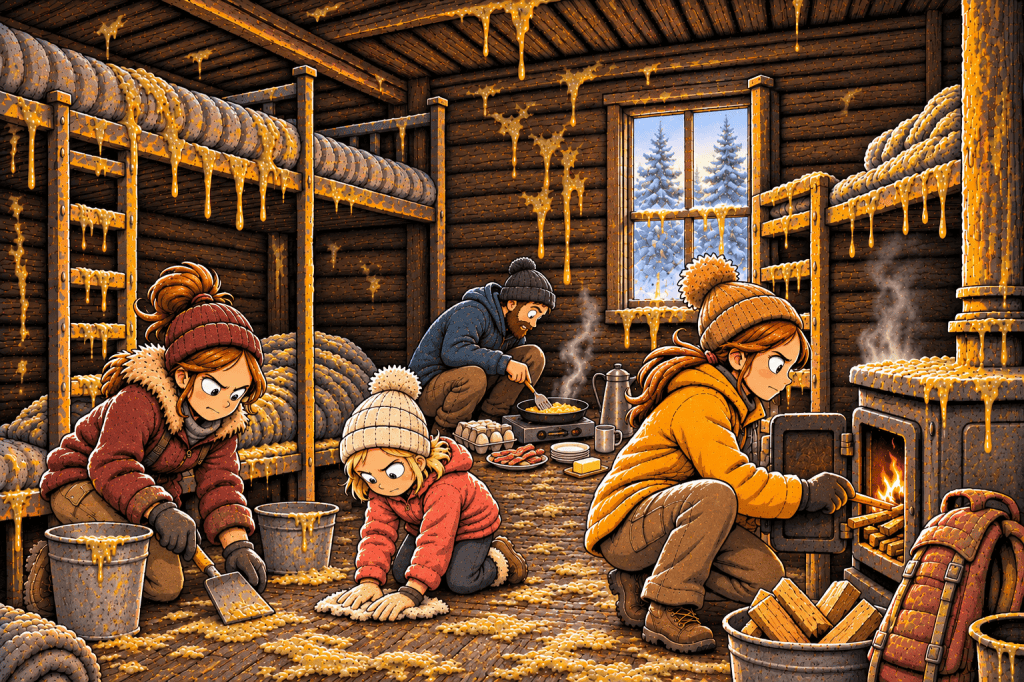
Maren’s daughter remained remarkably patient through the whole ordeal. The kid had been raised in Yellowstone after all and, to some degree, was accustomed to life presenting unexpected challenges in the form of extreme weather, wildlife, and Uncle Chip.

Then we packed up and trudged back toward civilization.
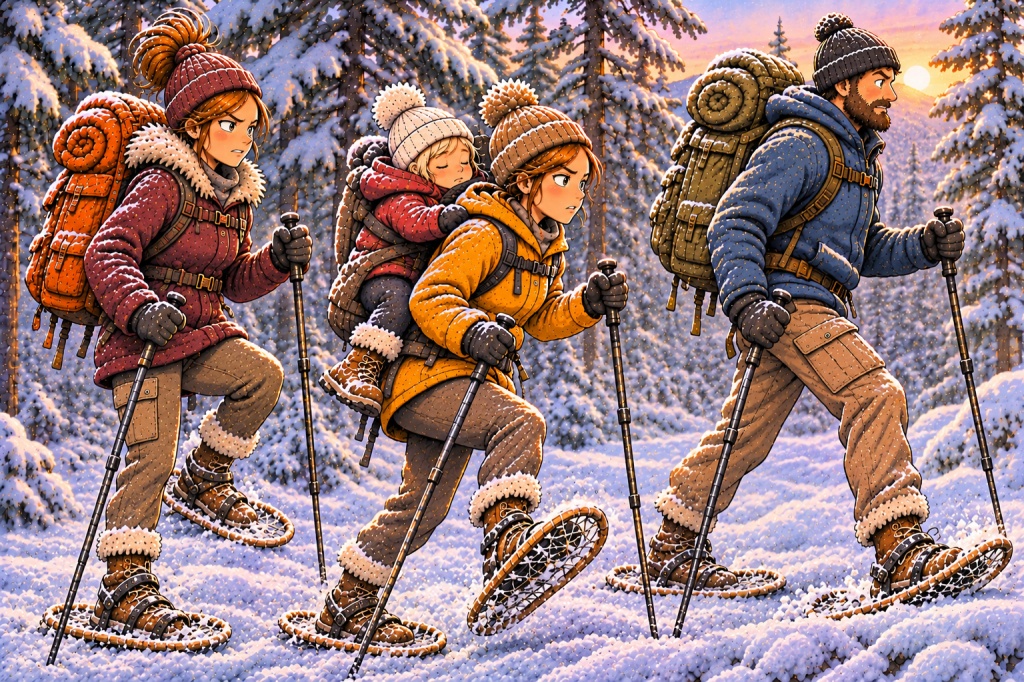
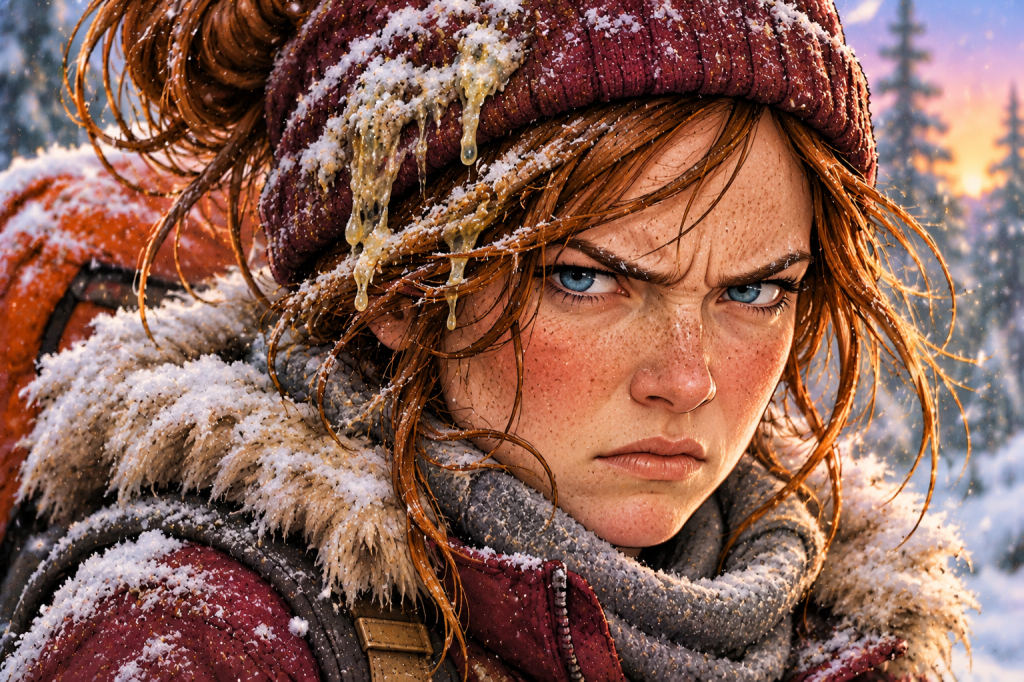
I had vomit frozen in my hair.
I have gone on many trips since then. I have slept in beds with proper mattresses. I have visited friends without hiking four miles through waist-high snow. I have eaten steak, eggs, and potatoes without having to consider whether the cabin might soon be classified as a crime scene.

But whenever someone says, “It’ll be fun,” I remember that backcountry patrol cabin in Yellowstone.

And I remember that four miles is not a distance.

It is a promise made by someone with a GPS and a four-year-old kid.
Dry Ice Bombs, Paintball, and Other Lessons in Womanhood

There are many ways for a young woman to learn about traditional masculinity.

She can read books.

She can study sociology.

She can thoughtfully examine gender roles across cultures and historical periods.

Or she can follow her older brother into an alfalfa field at midnight while a group of teenage boys detonate a series of homemade dry-ice bombs.

I chose the alfalfa field.

This was North Idaho in the early 2000s, which was a very particular place to be a teen.

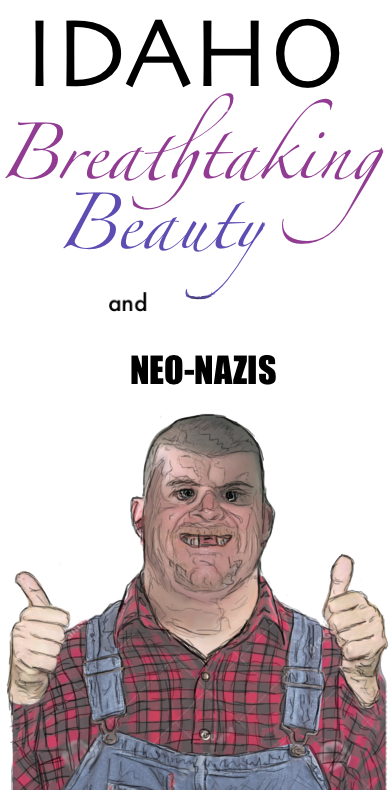
North Idaho was breathtakingly beautiful. Mountains. Lakes. Pine trees. Wildlife. Rugged individualism. Deep spirituality.

And, of course, Nazis.

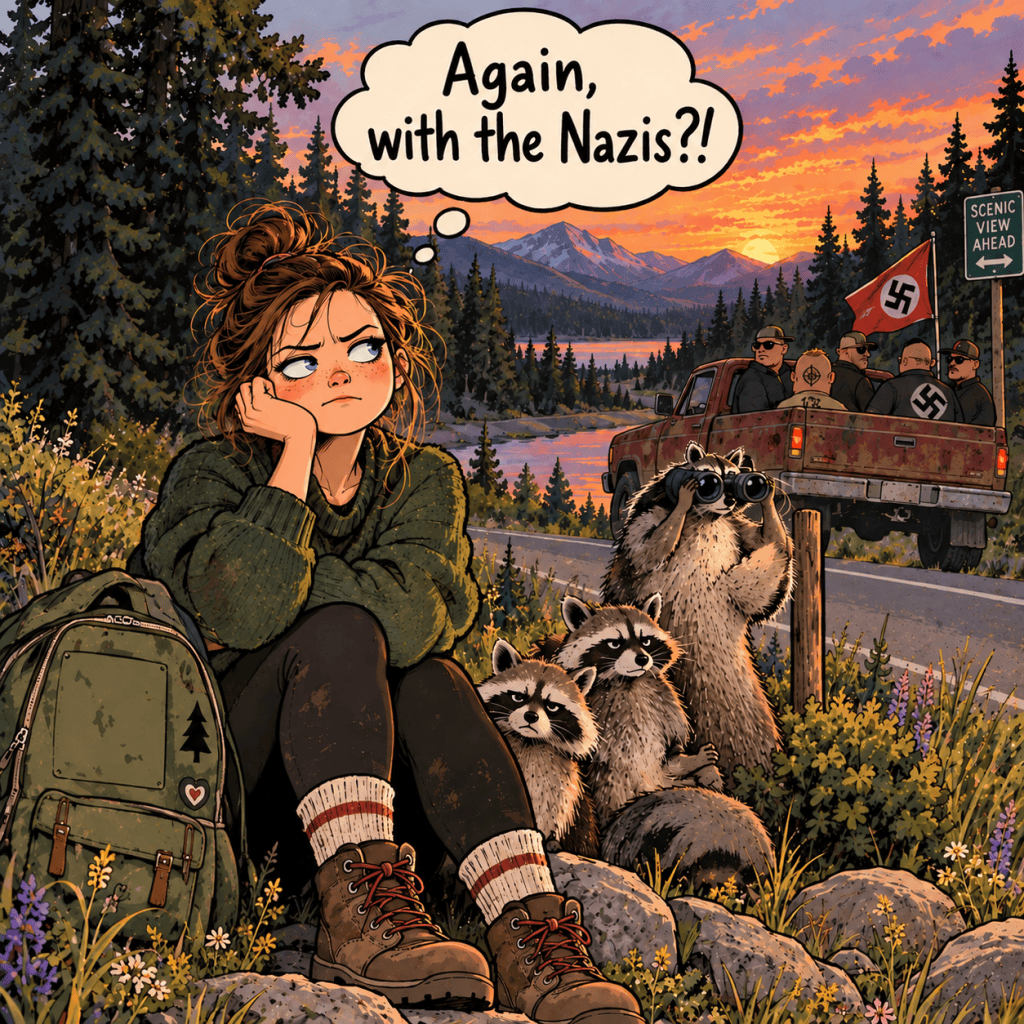
Neo-Nazis roamed around northern Idaho when I was growing up with enough regularity that adults discussed them the way people elsewhere might discuss unusually aggressive raccoons.

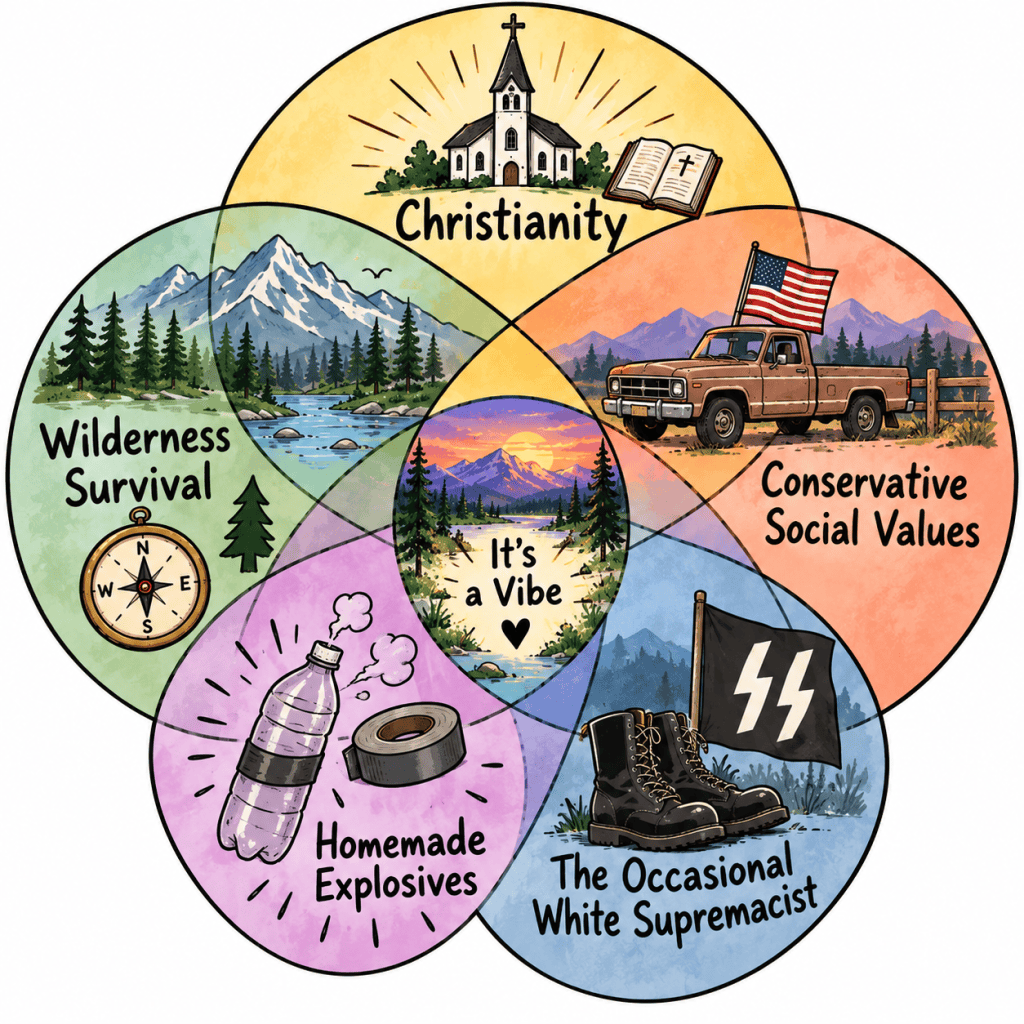
So I grew up in a cultural environment that somehow combined Christianity, wilderness survival, conservative social values, homemade explosives, and the occasional white supremacist.

It was an interesting ecosystem.

I was also the only girl in a family with three brothers.

This meant that femininity, as I understood it, developed under somewhat unusual laboratory conditions.

There were no sisters.

There were only boys.

Lots of boys.

Boys running.

Boys yelling.

Boys wrestling.

Boys building things.

Boys destroying the things they had just built.

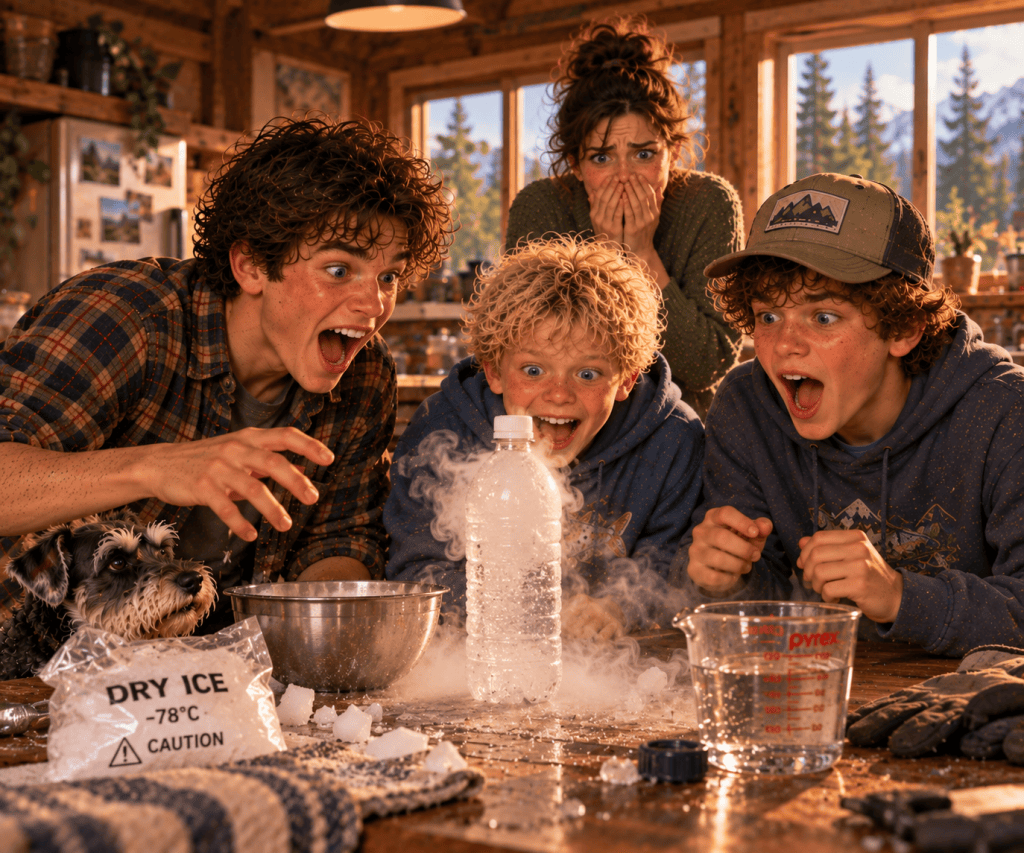
Boys discovering that if you put dry ice and water inside a sealed plastic bottle, something exciting would eventually happen.

My family had a certain ethos around all of this.

The basic philosophy was:

Ride extreme chaos while maintaining perfect poise.

Something could be actively exploding forty feet away and the expectation was essentially:

Stand up straight.

This is perhaps why I have developed such an unusual relationship with chaos.

Chaos itself does not particularly alarm me.

What alarms me is chaos without principles.

There is a difference, here.

But when I was younger, I didn’t know that. Like, at all.

At the time, I was mostly following my older brother around.

My brother had friends who embodied the particular species of North Idaho teenage boy that I would describe as pre-industrial libertarian woodland mammal.

One of these friends lived on a large piece of property in the middle of nowhere.

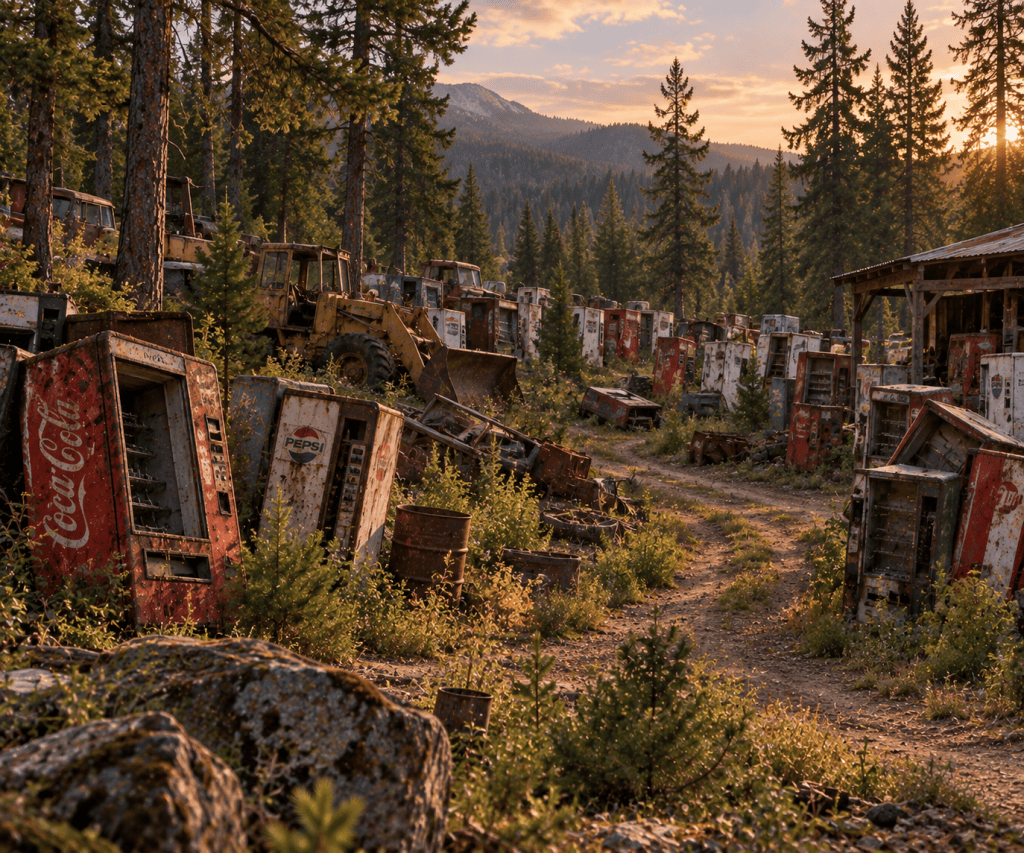
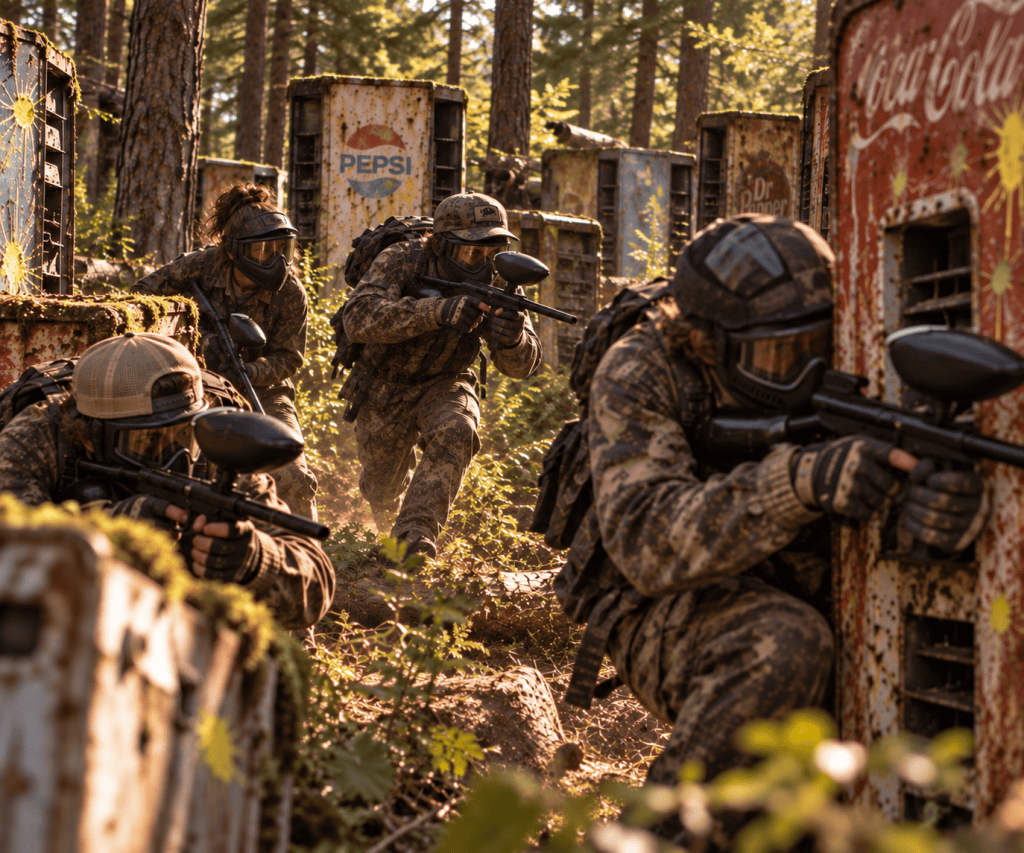
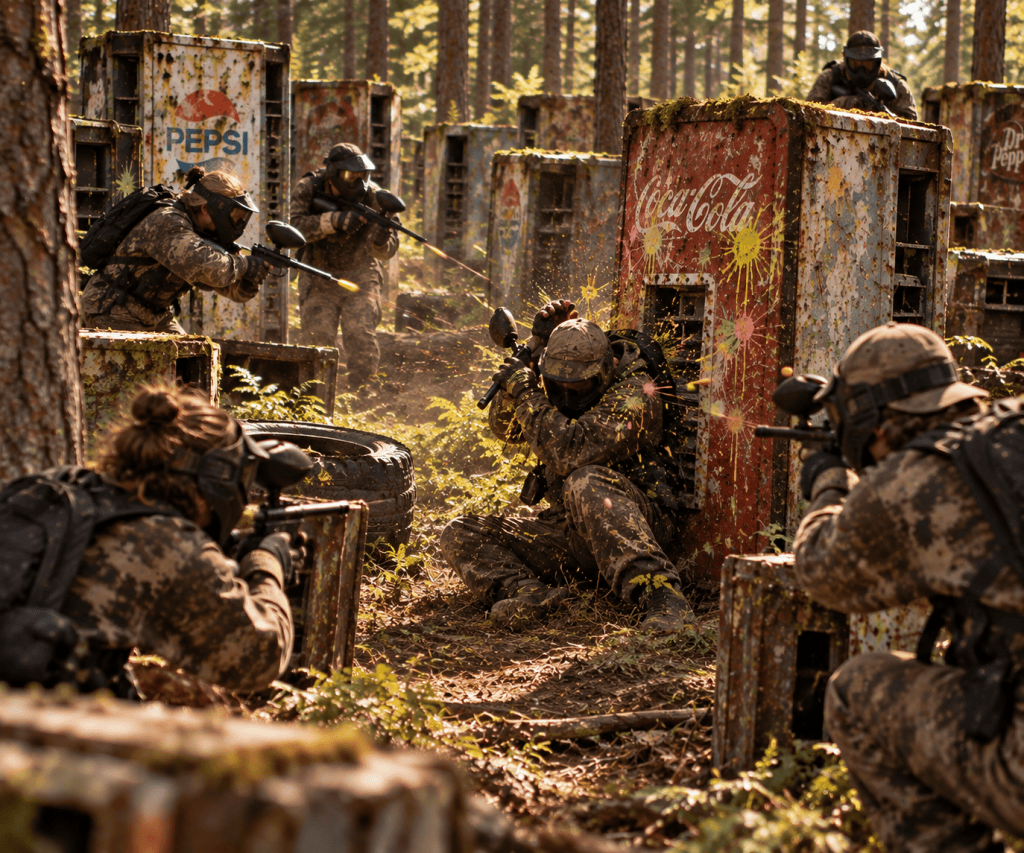
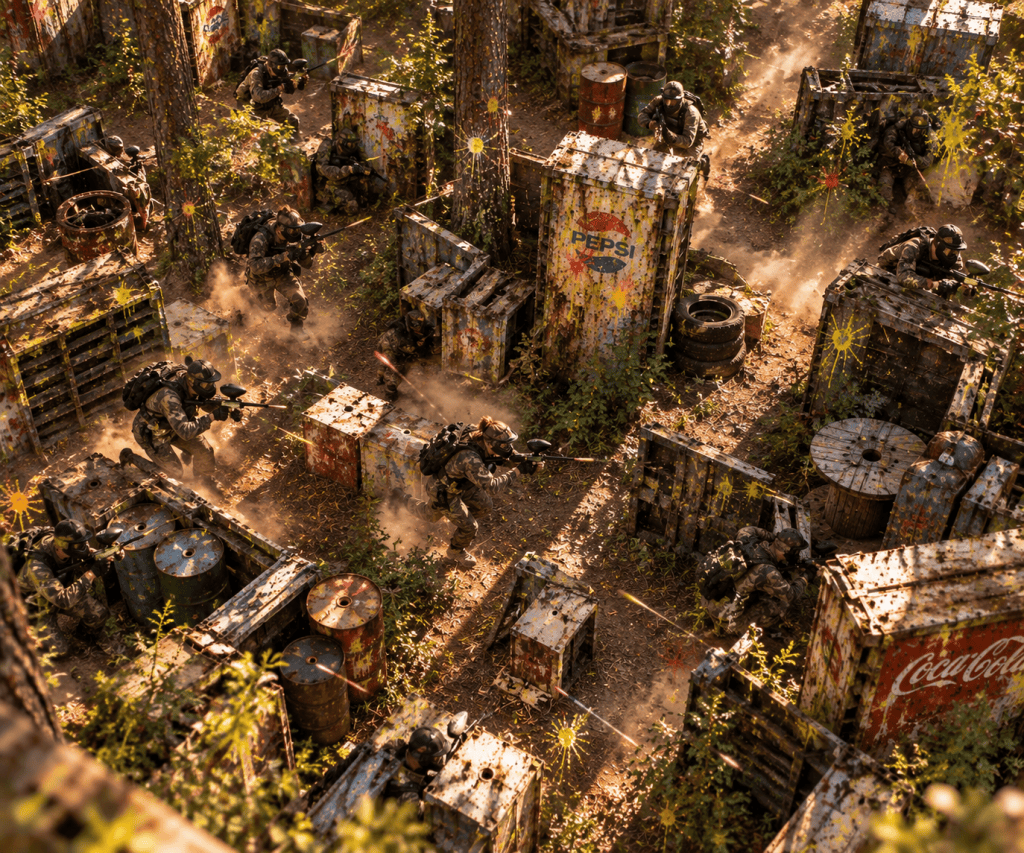
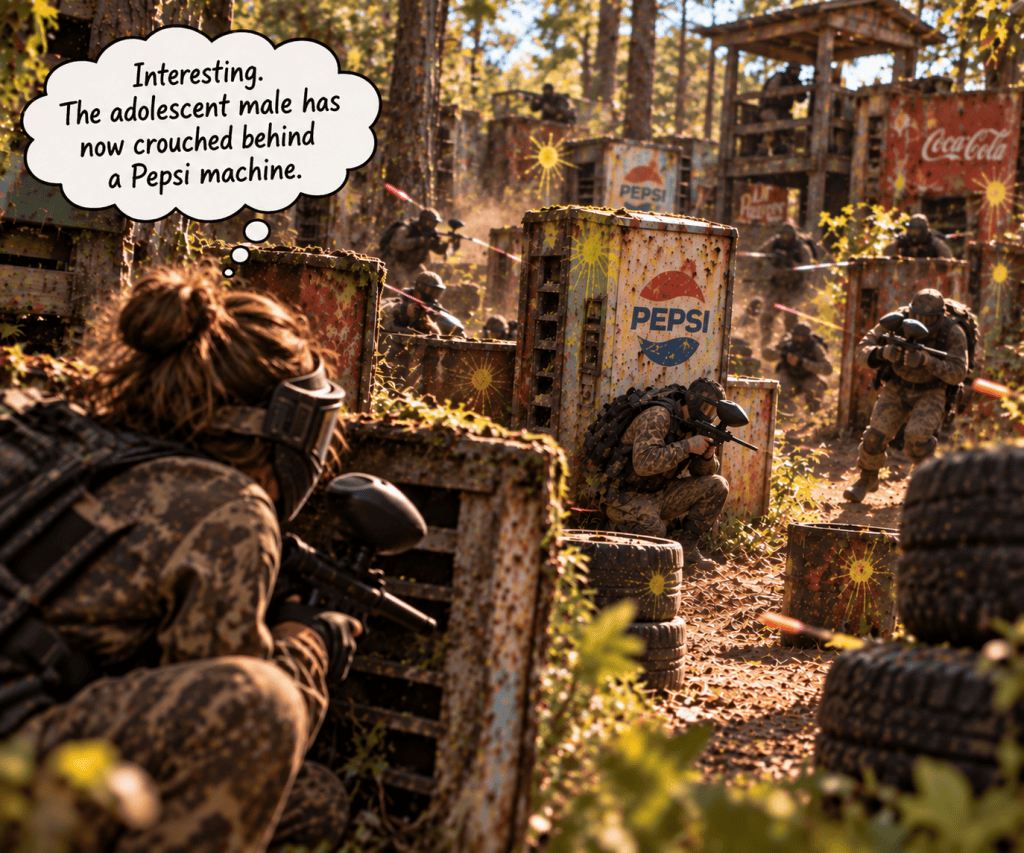
The property contained trees, dirt, miscellaneous machinery, and literally hundreds of old vending machines that appeared to have reached the end of their natural lives and been released back into the wilderness.

This is one of the first rules of rural culture:

Do not ask questions that the landscape has already decided not to answer.

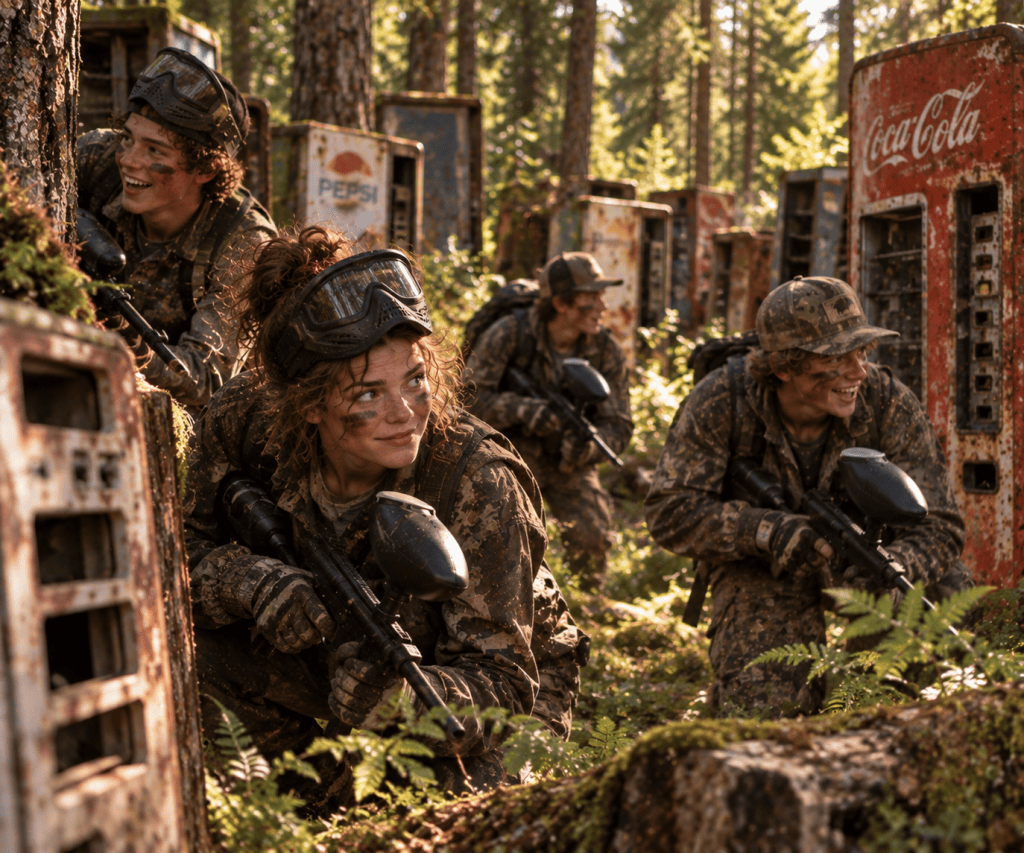
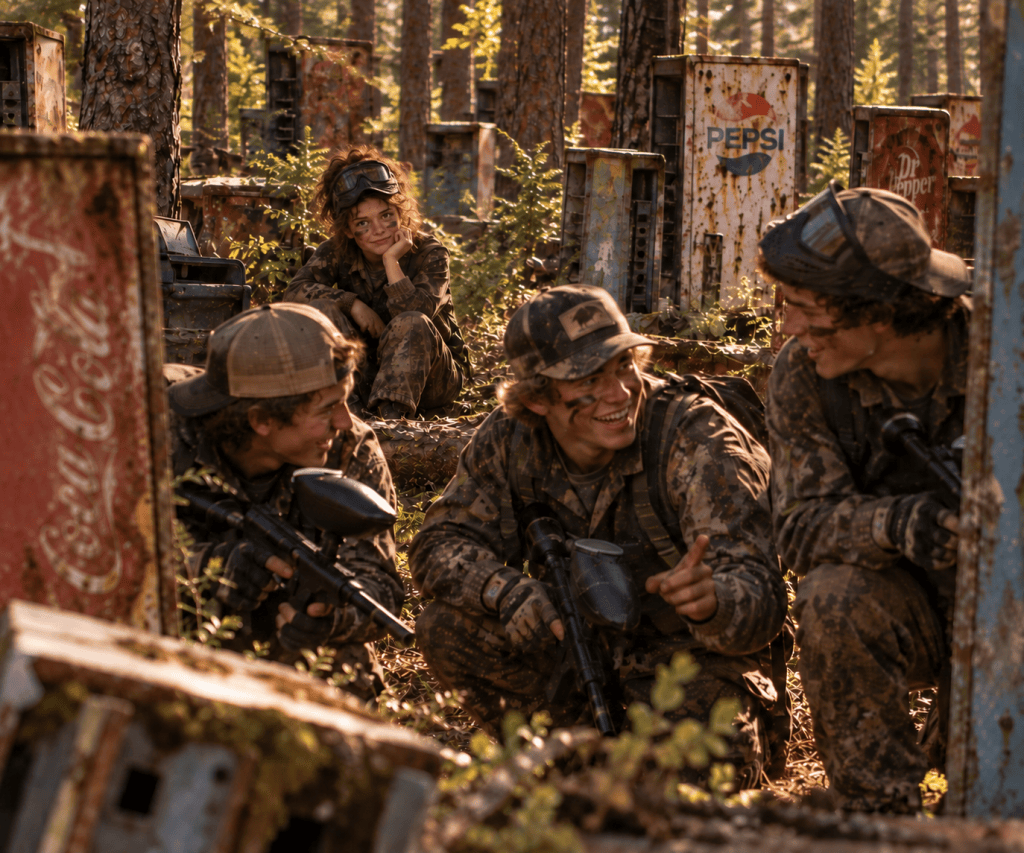
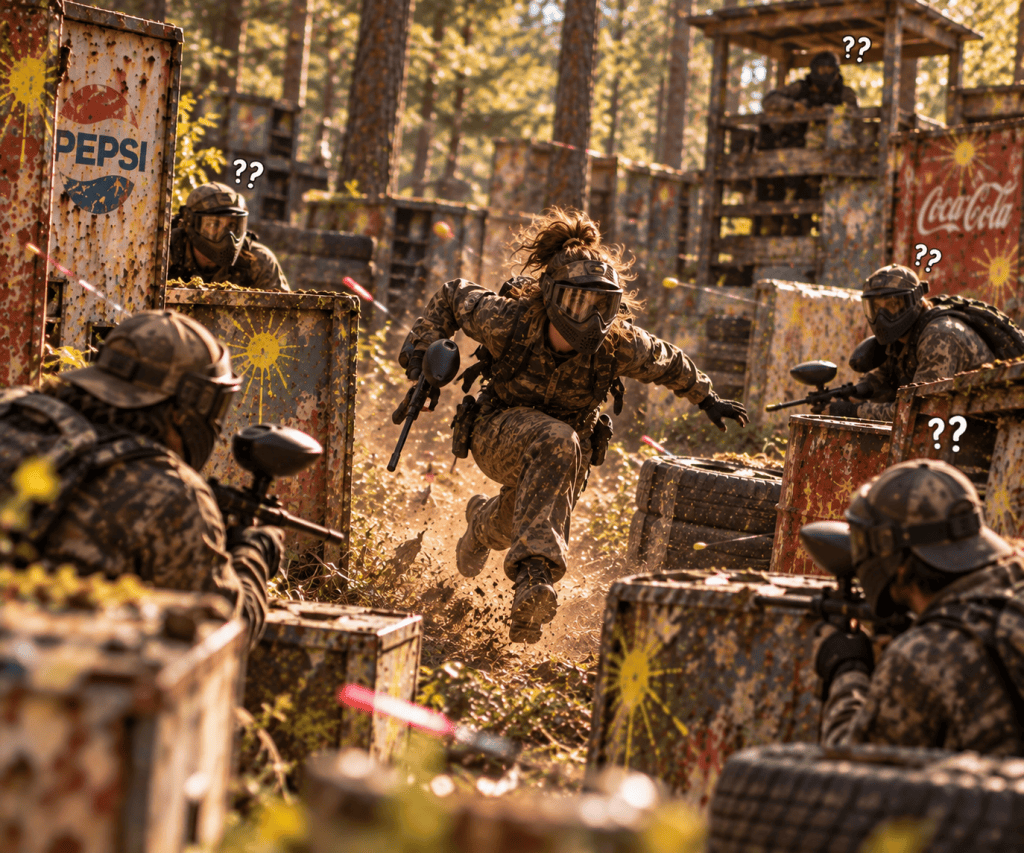
We played paintball there.

We would dress in camouflage, load our paintball guns, divide into teams, and disappear into the woods to hunt one another recreationally.

Because, why not.

I was often the only girl.

And, technically, I was participating.

But mostly I was observing.

This has actually been one of the great recurring themes of my life.

Everyone else thinks we are doing an activity.

Meanwhile, I am conducting an unauthorized anthropological study.

The boys were fascinating.

Once the game began, something changed.

They became intensely focused.

Communication became brief.

Movement became deliberate.

Nobody needed to discuss how everyone felt about the current tactical arrangement.

Nobody stopped behind a tree and said:

“I just want to make sure Trevor feels heard.”

Trevor was behind a refrigerator.

Trevor was under full assault.

Trevor was fine.

There was an objective.

There were rules.

There were teammates.

There was risk.

And suddenly everyone locked in.

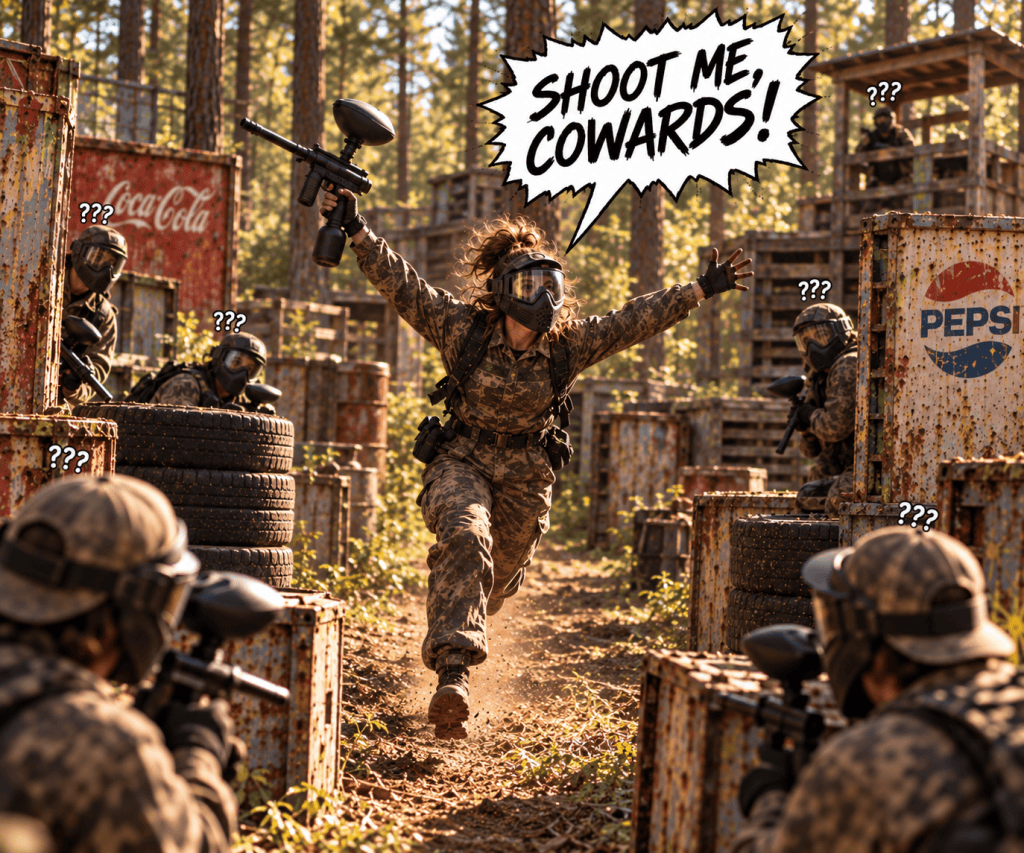
I remember one particular game when nobody would shoot me.

I think they felt bad.

I was the girl.

Also, to be fair, I was not demonstrating tremendous tactical aggression.

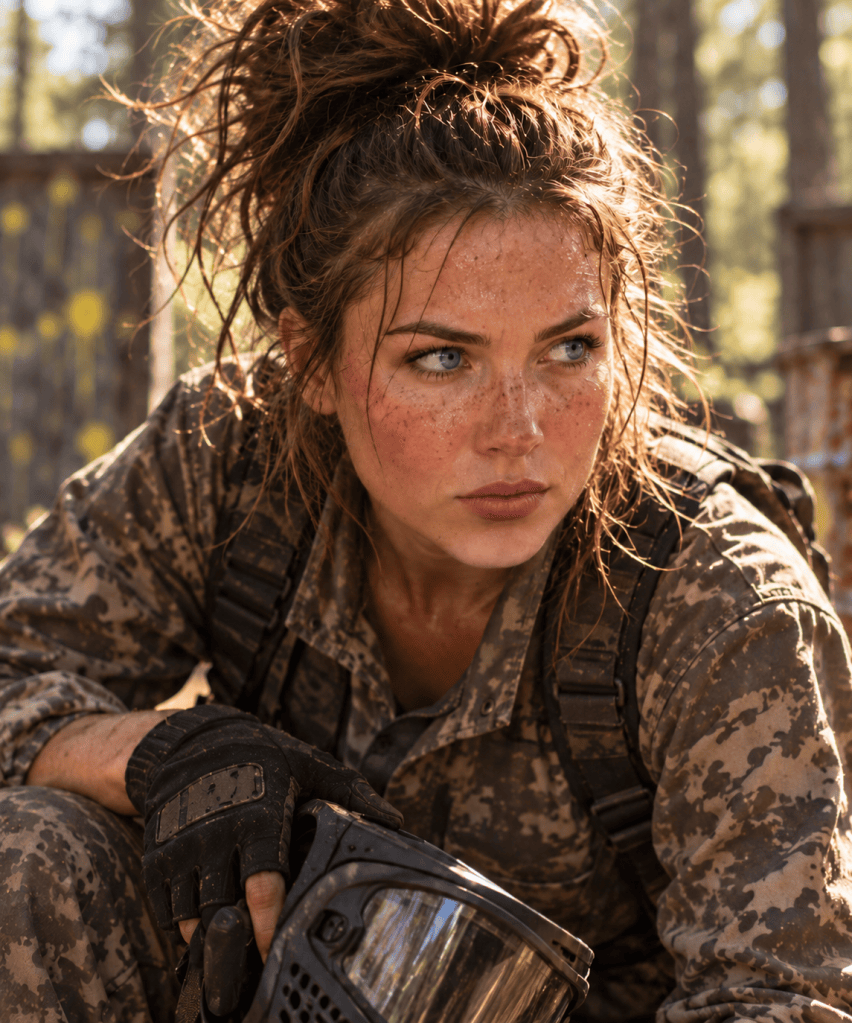
I was wandering around the battlefield like Jane Goodall.

Eventually I became irritated because I wasn’t viewed as a viable threat.

I had come here to play paintball!

Being treated like a visiting dignitary was ruining the experiment.

So I did the only reasonable thing I could think of.

I ran directly into the middle of the battlefield.

Duh.🙄

Fully exposed.

A bizarre, tiny camouflaged feminist protest.

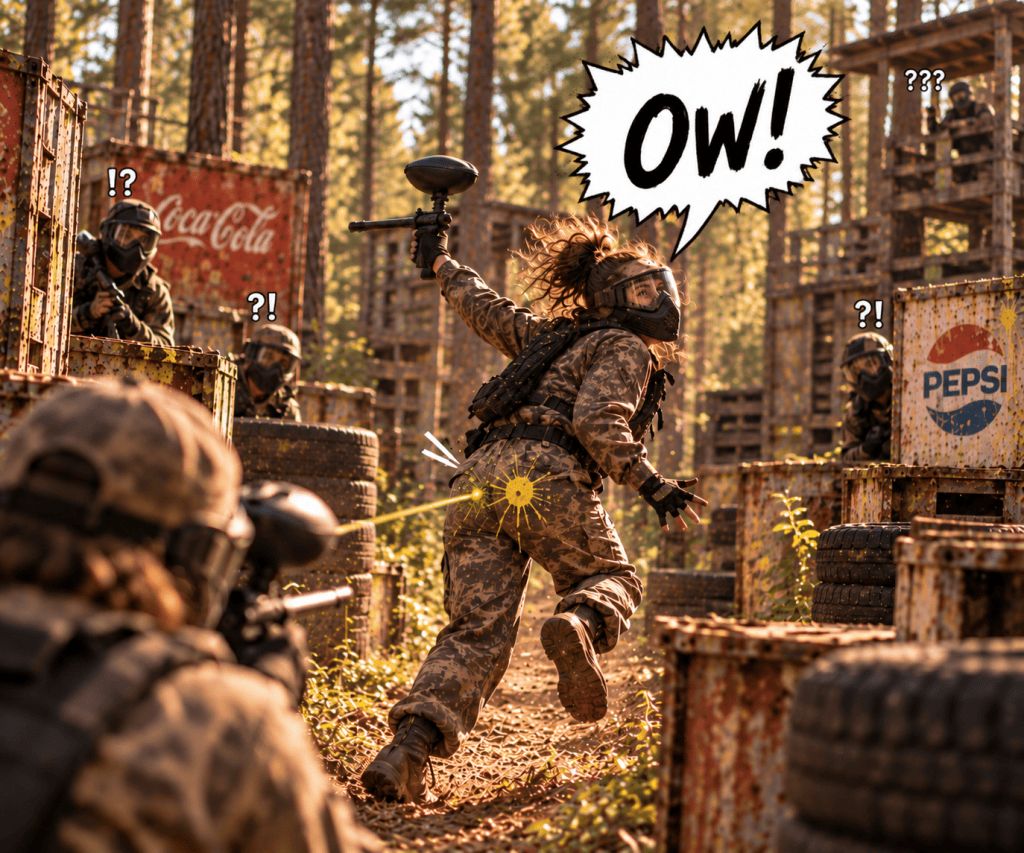
Eventually somebody did.
Right in the butt.

And frankly, I respected it.

Because equality had finally arrived.
It just happened to arrive at approximately 280 feet per second in the rear.
🤪

I think about those boys sometimes.

Not because dry-ice bombs and abandoned vending machines represent the pinnacle of civilization.

I mean, they really don’t.

(I would like to state that clearly for obvious legal purposes).

But underneath all that adolescent stupidity, I was watching something ancient.

When circumstances demanded it, those boys knew how to narrow their attention.

Protect their people.

Know where they stood.

Watch the perimeter.

Don’t panic.

Don’t abandon the objective because someone, or something, made you uncomfortable.

And, importantly:

There are moments when the situation is bigger than yourself.

Like, in a way that is very real.

Because as I grew older, I began noticing something about myself.

There are moments when I lock in.

Not physically.

I am not especially interested in storming an actual hill.

I would strongly prefer that nobody storm any hills, if I’m honest.

But there are moments when something fundamental is being threatened. Someone’s dignity, someone’s humanity, someone’s basic right to exist safely among the rest of us.

And something inside me becomes remarkably still.

The social static disappears.

Whether everyone likes me becomes irrelevant.

Whether I look graceful becomes irrelevant.

Whether speaking costs me something becomes significantly less important.

There is simply the perimeter.

And something worth protecting inside it.

That, I think, is one of the healthiest things I absorbed from the masculine culture around me.

Not domination.

Not aggression.

Not the ridiculous idea that whoever is strongest gets to decide what reality is.

Quite the opposite.

Strength becomes honorable when it places itself in service of something more vulnerable than itself.

That principle isn’t male.

It isn’t female.

It’s human.

And if I’m really honest, I believe it’s divine.

But I first saw one particular version of it among boys.

And eventually I learned how to translate it into womanhood.

My version looks different.

I don’t need to become louder than everyone else.

I don’t need to humiliate anyone.

I don’t need to overpower another person to prove that I cannot be overpowered.

Sometimes locking in looks remarkably feminine.

It can look like composure.

Discernment.

Refusing to join a mob.

Standing beside the person everyone else has quietly decided is expendable.

Saying no when cruelty has been dressed up as tradition.

Saying yes when fear has been dressed up as wisdom.

Remembering that human beings remain human beings even when the room has temporarily forgotten.

Especially then.

Maybe that’s one of the many strange little nuggets of wisdom I’ve carried out of those North Idaho woods.

I grew up surrounded by contradictions.

Deep faith and some backward thinking.

Extraordinary beauty and genuine ugliness.

Tenderness and bravado.

Boys blowing things up for absolutely no reason while adults tried to raise us into decent human beings.

And somewhere inside all of that, I learned to watch.

I learned that power reveals itself most clearly by what it chooses to protect.

I learned that chaos doesn’t require panic.

I learned that sometimes maintaining your humanity means becoming extremely calm while everyone else is losing theirs.

And I learned that preserving collective human dignity occasionally requires a woman to stop worrying about whether she is behaving correctly and run directly into the middle of the fray.

Which may be a little stupid.

But is also apparently effective.

Because eventually somebody will shoot you in the butt.

And then at least everyone knows you’re playing.

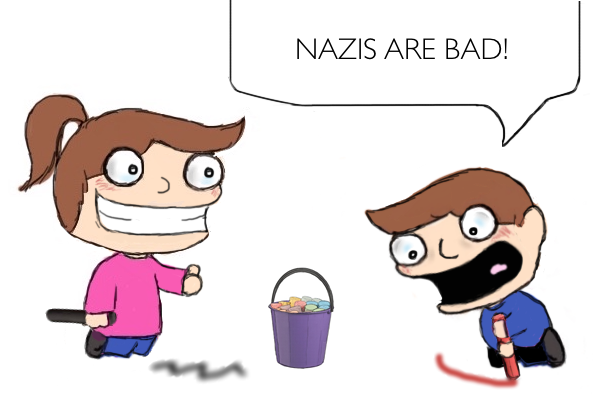
Nazis Are Bad

I grew up in the panhandle of north Idaho where the mountains were wild, the people were small-town friendly and there were surprisingly very few potato fields.

potatoes5

It also happened to be the hotbed of a white supremacist group.

redneck17

There’s a reason why they push the whole potato thing.

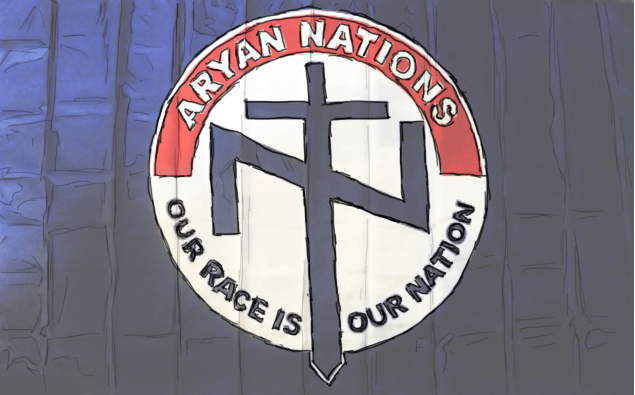
As the area was remote and predominantly white a group called the Aryan Nations had established a compound just a few miles north from my childhood home.

In celebration of their Caucasian-ness they liked to sponsor an annual parade on the main street of our town where they’d sport antisemitic signs and white supremacist flags. Being young, naive and very sheltered I understood nothing about racial prejudice or hate crimes. And since I liked parades I was irate when my parents told me I couldn’t go.

stupid6

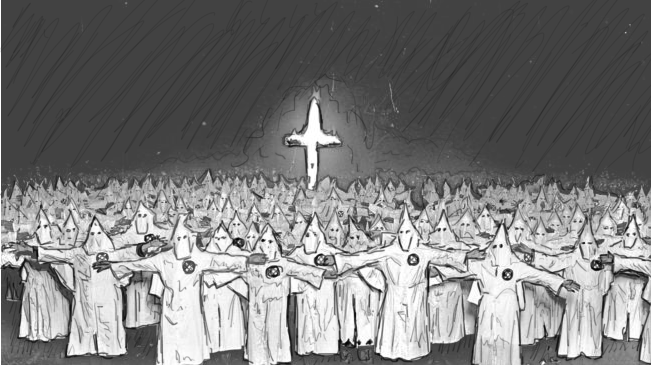
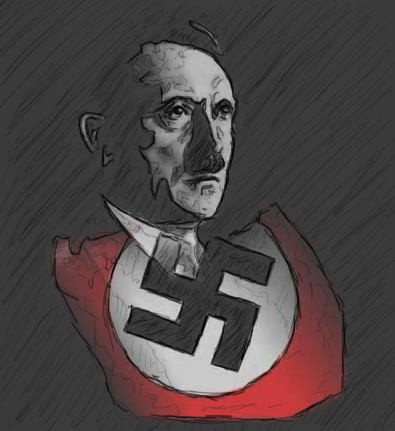
So my dad sat me down and gave me a little history lesson:

ary5

arrow3

white4

arrow3

hood5

arrow3

hit9

arrow3

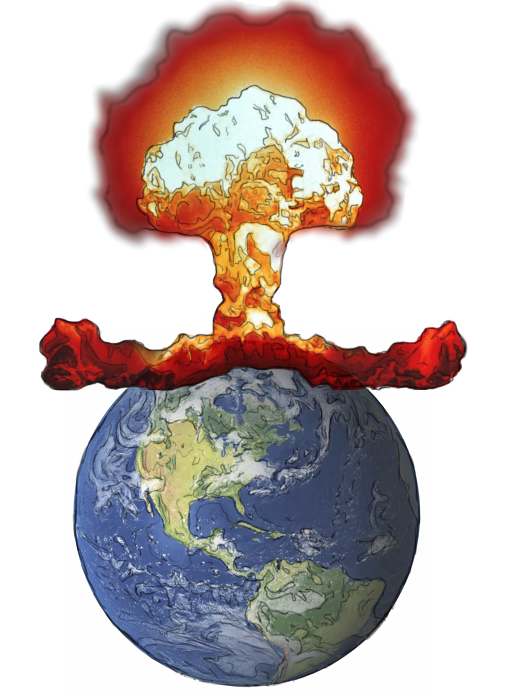
nuc9

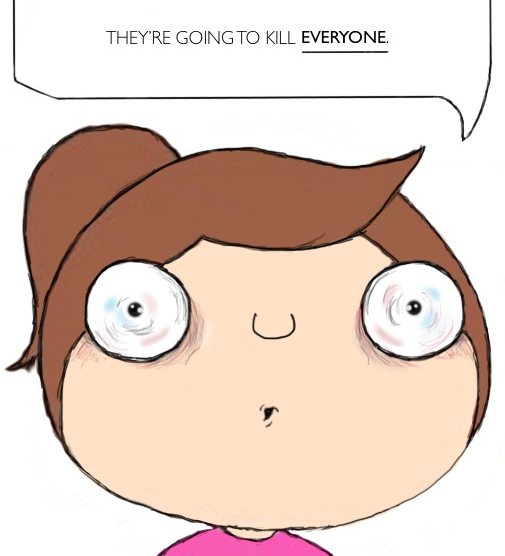
Which scared the living crap out of me.

dead25

As I’ve always found drawing to be cathartic I grabbed my bucket of chalk and headed out to the patio to do some emotional processing.

chalk15

With tenacity and drive I set to work.

chalk20

I even recruited the aid of my younger brother.

chalk29

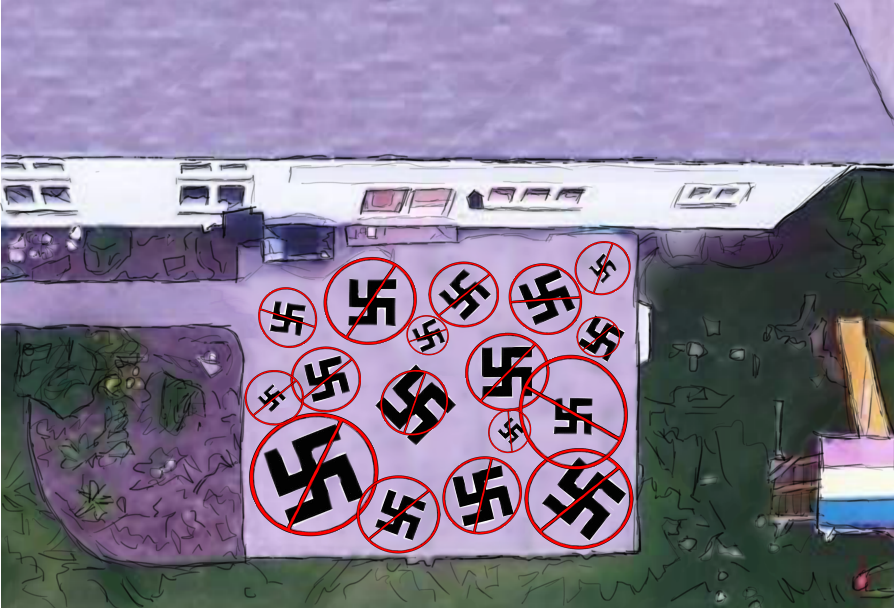
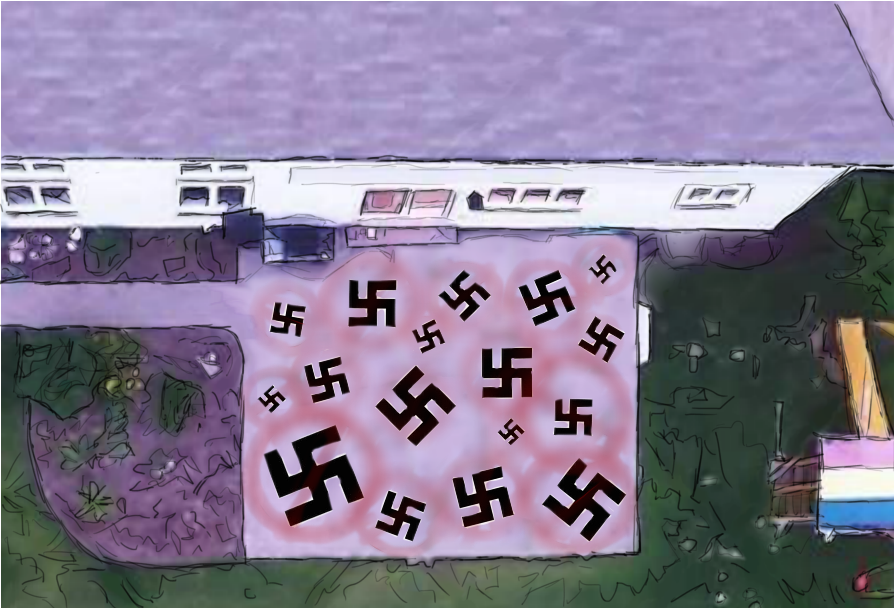
For hours we feverishly drew and colored until the patio was an extraordinary display of black and red.

symbol9

I was proud of my artwork and didn’t understand why my mom freaked out when she came out to check on us.

mom16

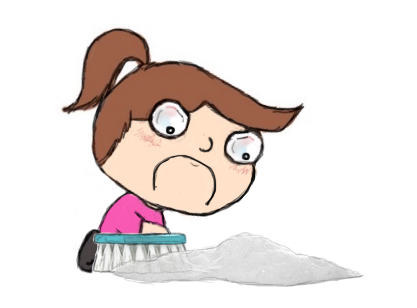
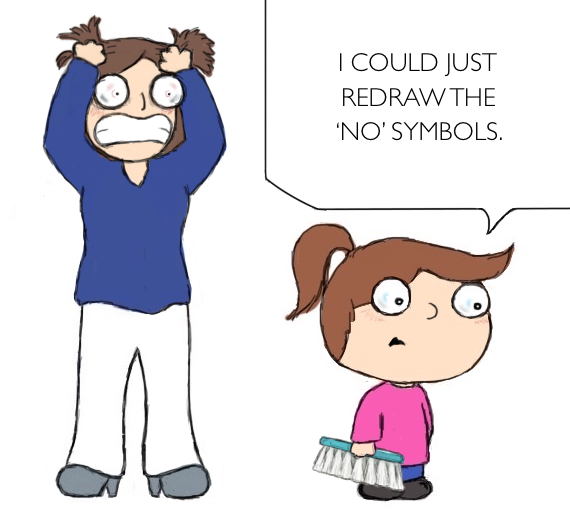
Thirty seconds later I found myself armed with a scrub brush and soaked with warm soapy water.

soap5

Unfortunately, the black chalk proved to be significantly more resistant than the red, which somehow made the whole situation worse.

symbol10

It probably didn’t help that my parents were supposed to host a patio party later that evening.

momscrubbrush7

As you might expect I was grounded for the rest of my life and the backyard had to be quarantined until the harsh Idaho weather eventually scrubbed the patio clean.

It took about a year.

I learned a valuable lesson that day, though. I learned that if you ever do anything that could possibly be considered offensive you should do it in a subtle and sneaky way so your parents never find out.

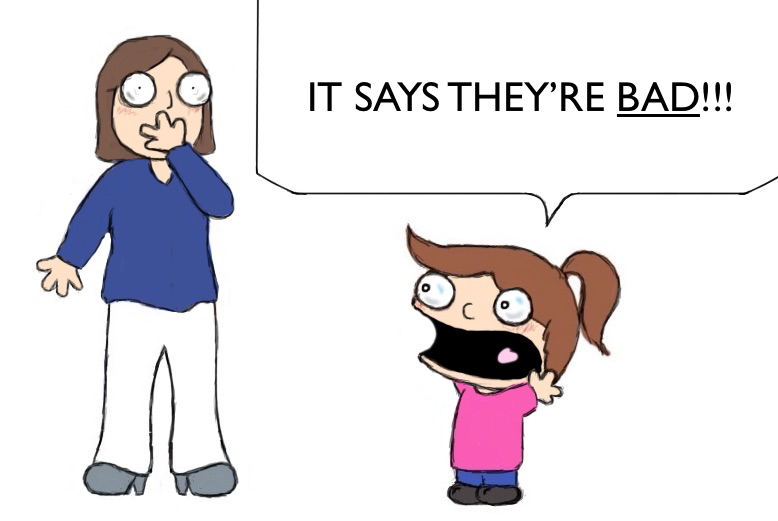
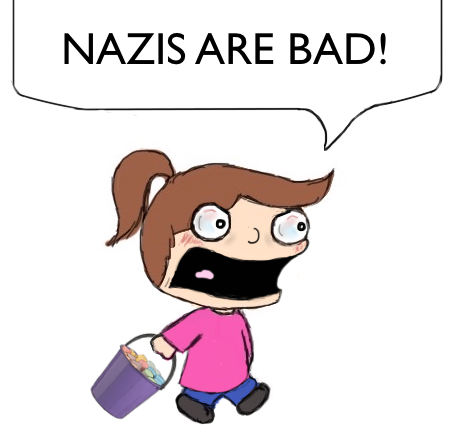
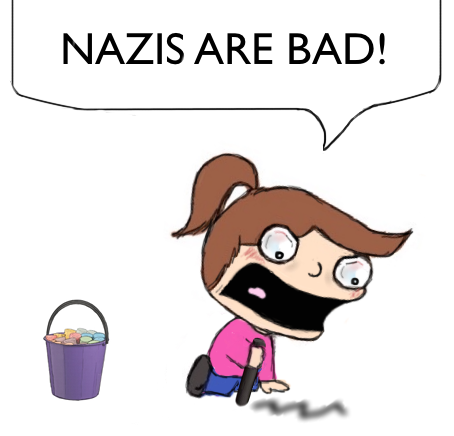
I also learned that Nazis are pretty bad.

swaz4