*Fair warning: While hilarious, this story is not for the faint of heart (or stomach). Therefore, proceed at your own psychological risk.*
Let us begin.

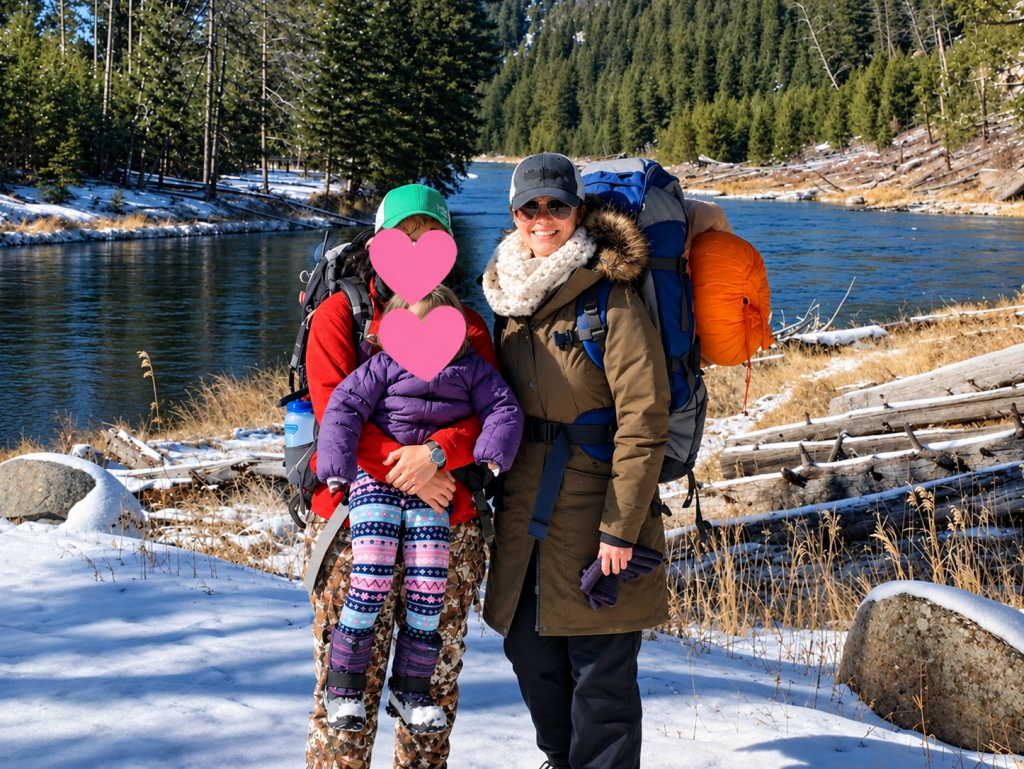
In early November of 2019, I went to visit my friend, Maren, a park ranger and police officer in Yellowstone National Park. We’d been friends since the beginning of high school, which meant we had accumulated enough years of shared history to know better than to question each other’s judgment.
Or so I thought.
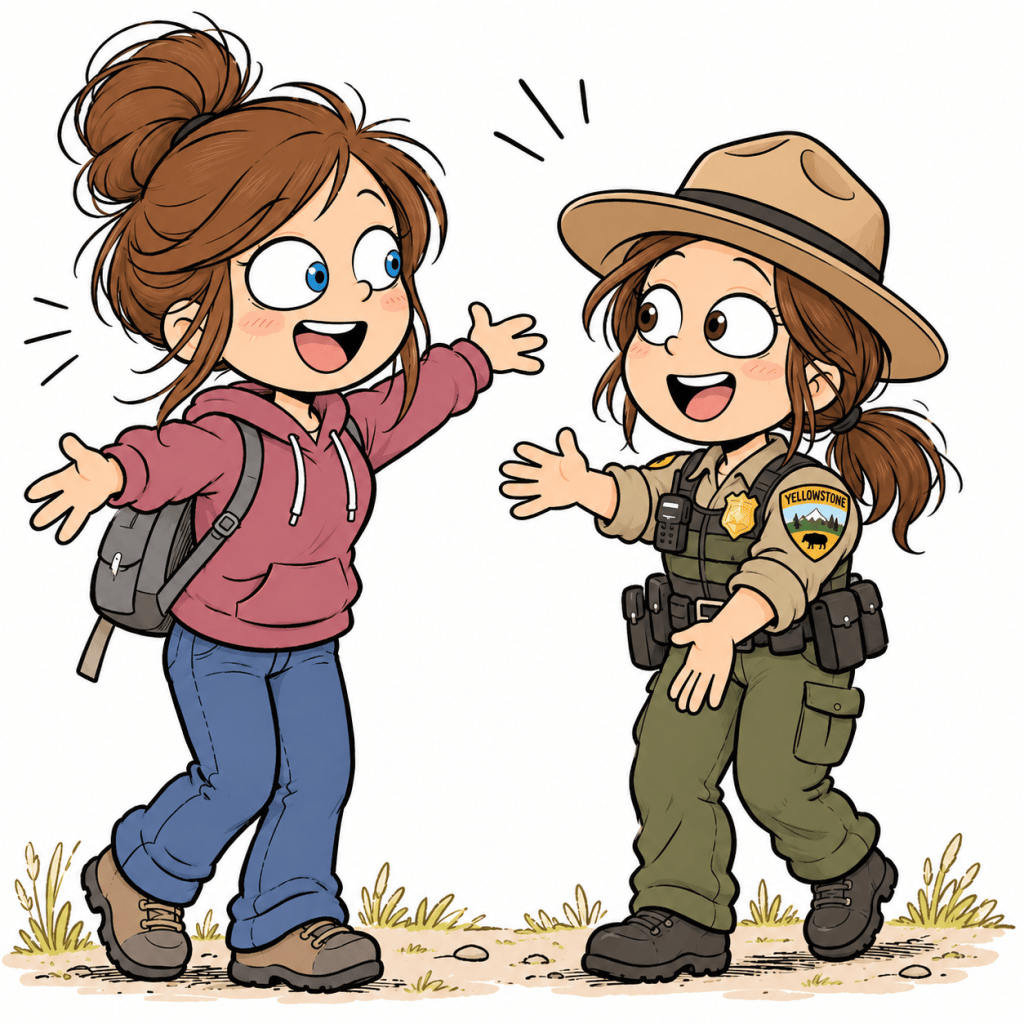
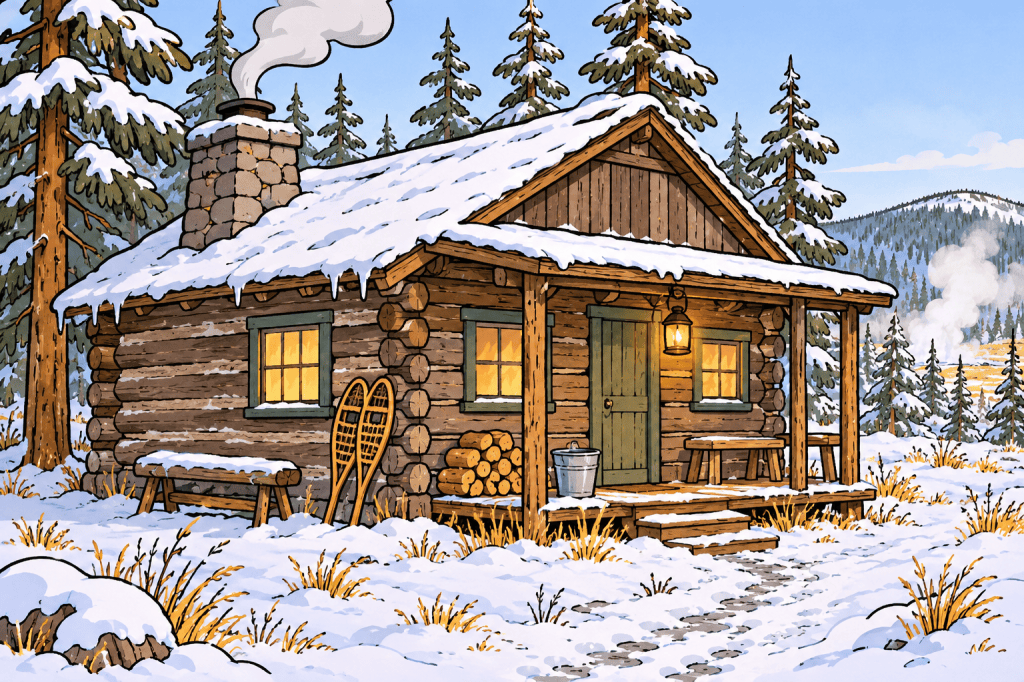
At the time, Maren’s daughter was four, and Maren’s brother, known to everyone as Chip, was living with them. One morning, Maren stated that we should hike into the park and spend the night in an old backcountry patrol cabin built sometime in the 1920s.
“It’ll be fun,” she said.
Famous last words.
So, we packed up.
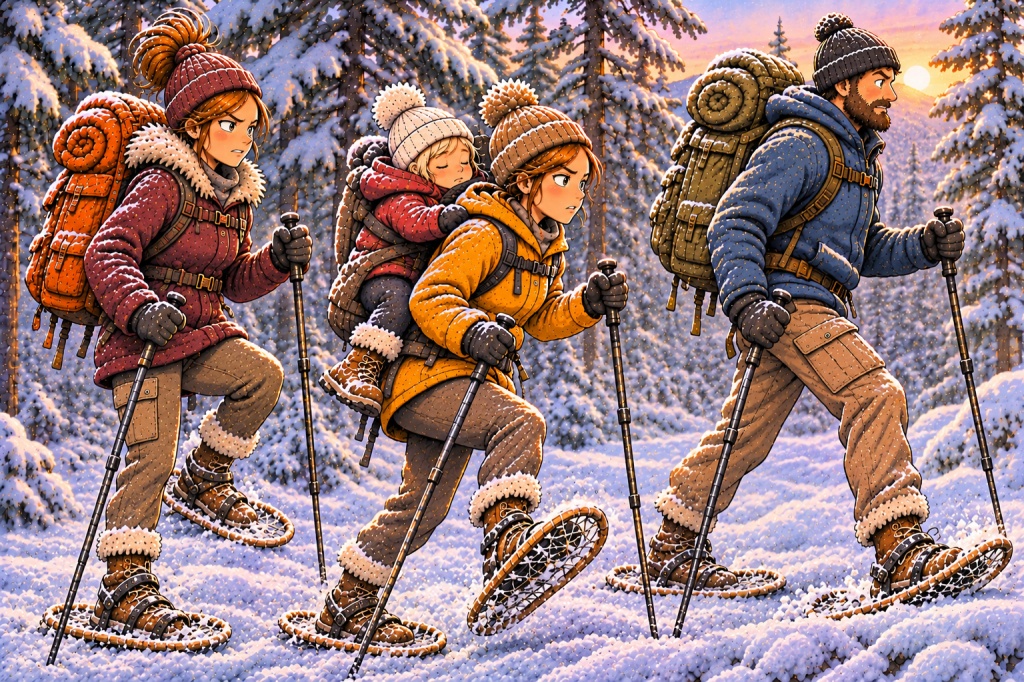
Maren, Chip, her daughter, and I shouldered our packs and started hiking.
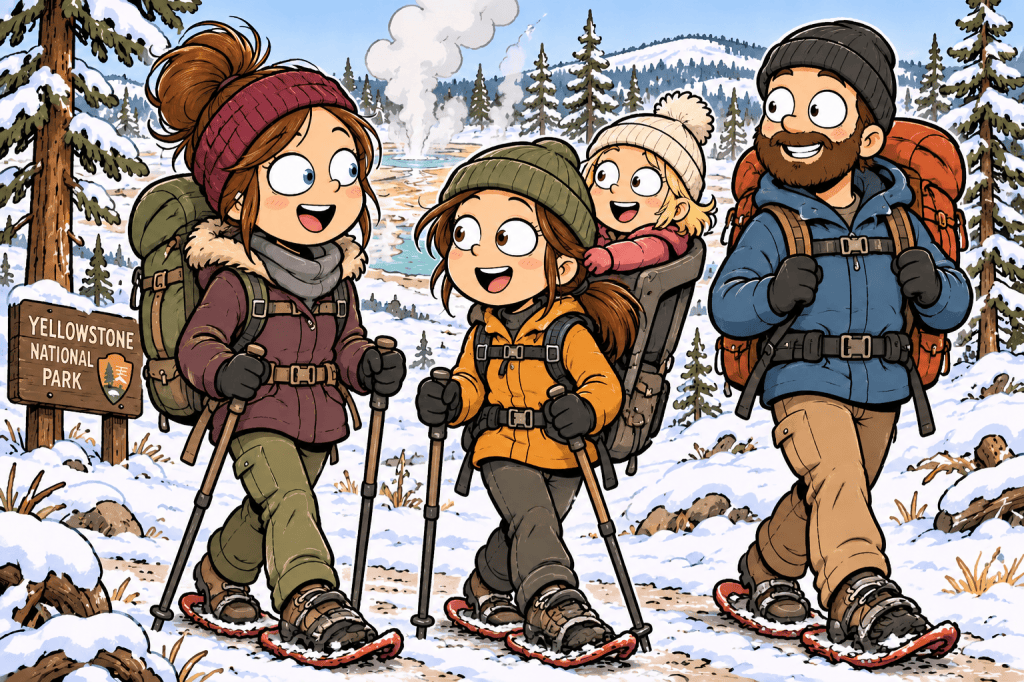
“It’s only about four miles,” Maren explained, in the tone of someone describing a trip to the mailbox.
Four miles is a modest distance under normal conditions. Four miles through snowdrifts two or three feet deep is a different unit of measurement entirely. It really should be measured in sighs, damp socks, and the number of times you begin to wonder if your friend has misread the map.
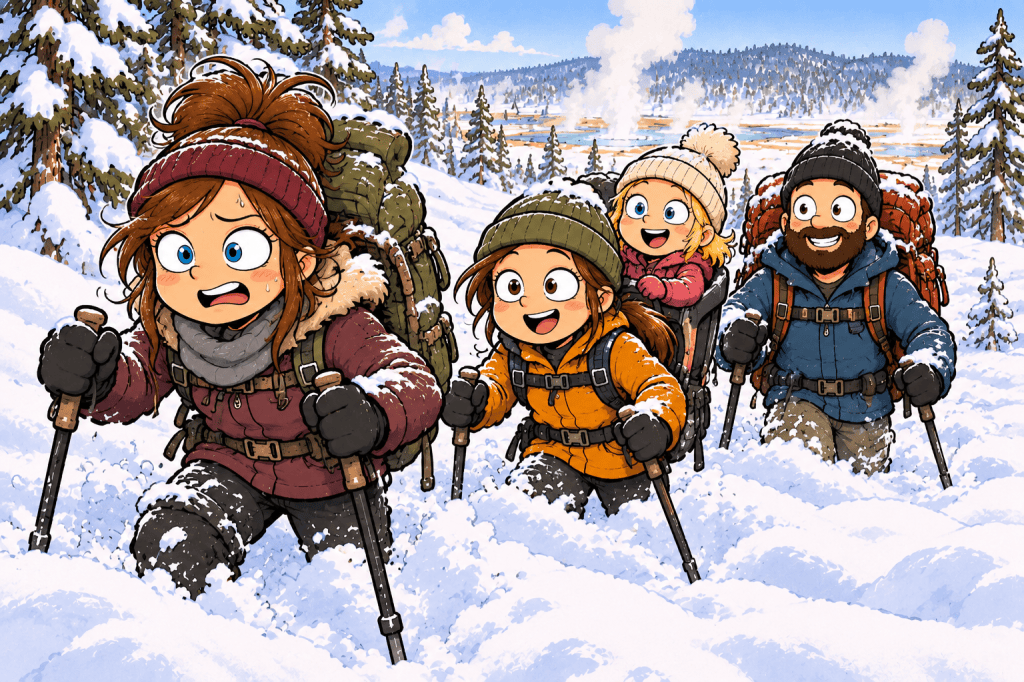
At first, it was lovely. The sun was out. The sky was a bright, uncomplicated blue. Maren had her GPS, and we wandered deeper into the park with the confidence of people who had not yet noticed the sun moving toward the horizon.
We trudged along. The scenery was beautiful. The snow was picturesque. The company was good. I was having a nice time in the way people have a nice time when they still believe the cabin is where someone said it would be.
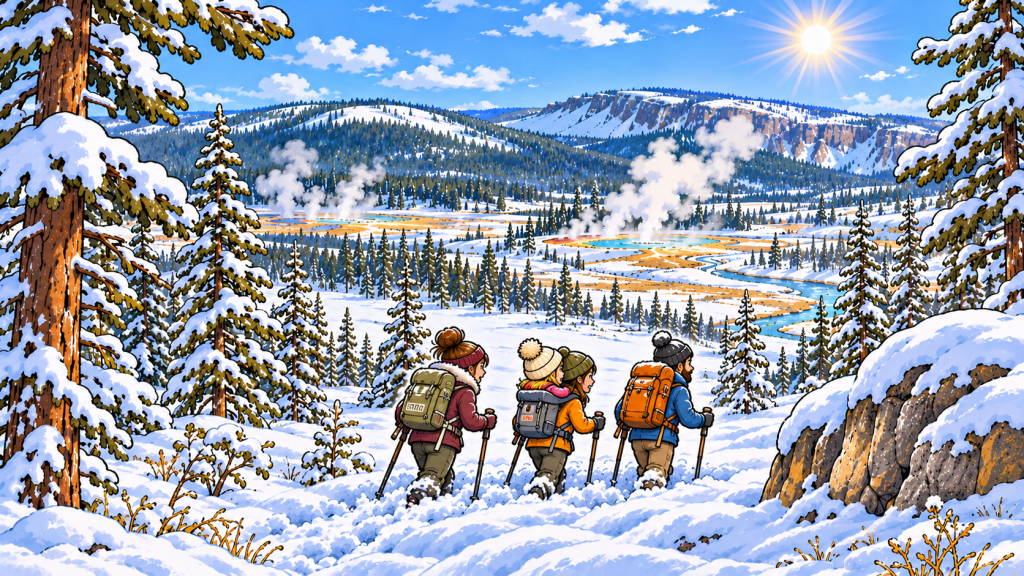
Then the day began to change its mind.
The sun stretched lower across the sky. The temperature dropped. The wind picked up. The cabin was nowhere in sight.
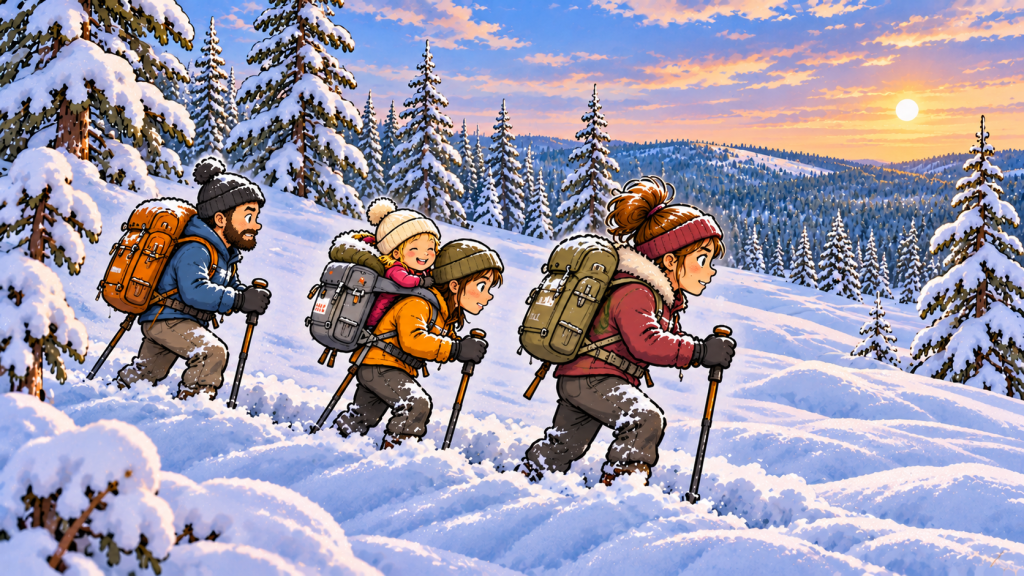
I began to panic quietly.
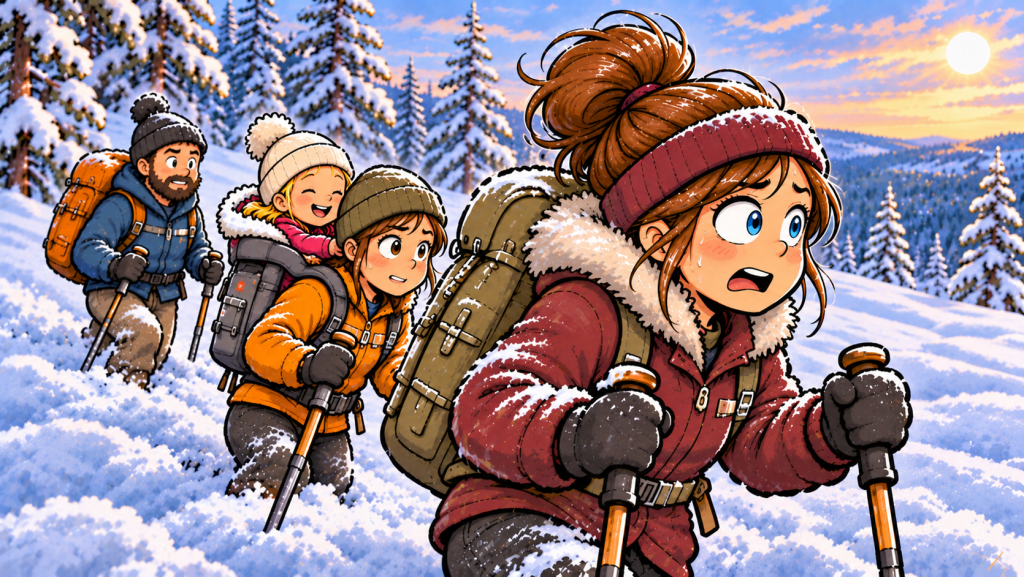
Then I upgraded to a more visible panic.
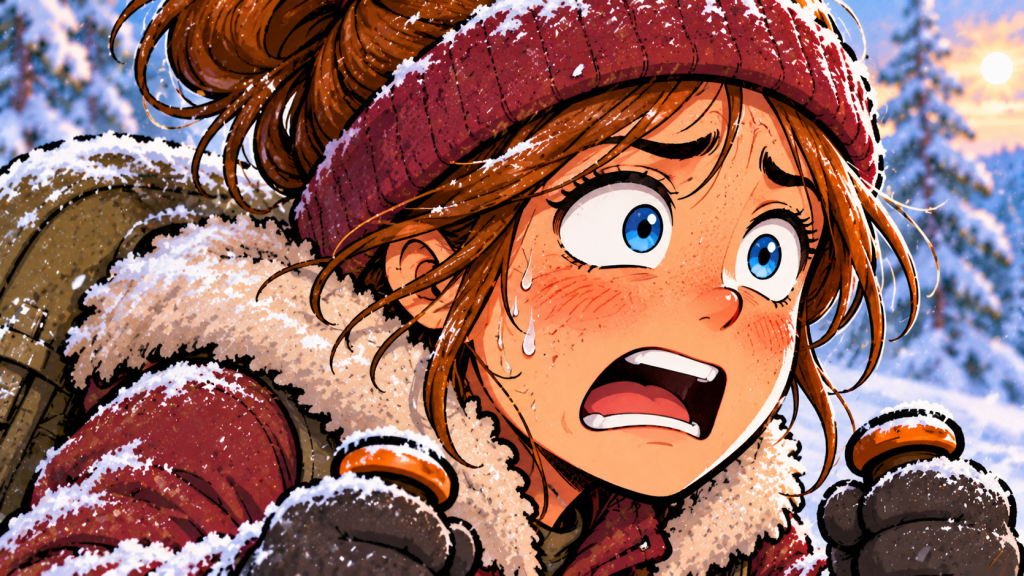
Maren gently reassured me that we would reach the cabin before sunset. I appreciated the reassurance. I also thought she might be wrong. The nonexistent trail continued to produce snowdrift bends and hills that were apparently “just over the next hill” kind of hills.
I had begun to suspect the cabin was a philosophical concept rather than an actual building.
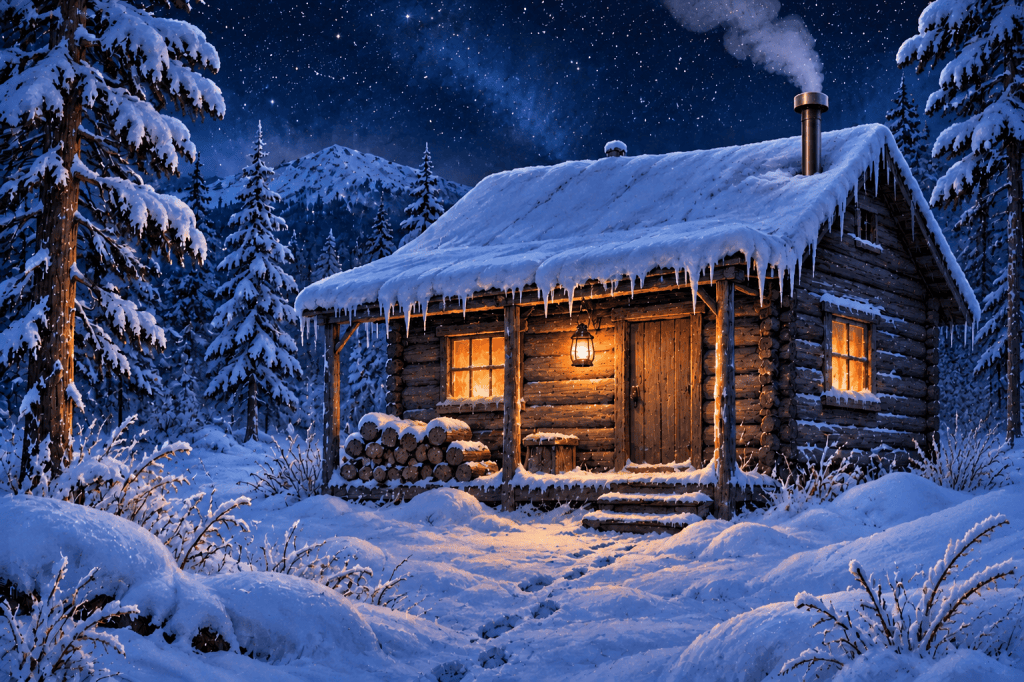
But eventually, and thankfully, it appeared.
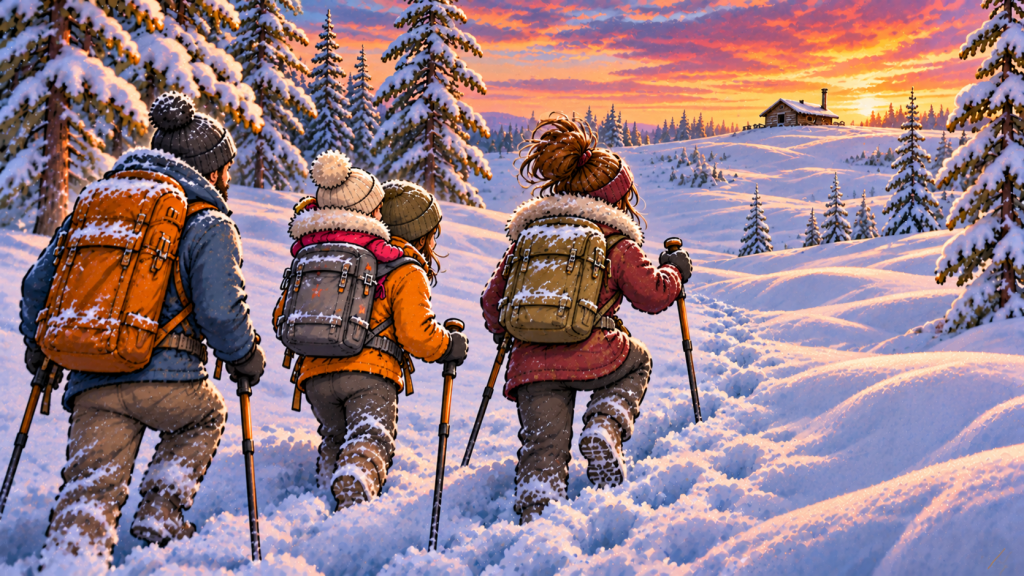
The relief was immediate and profound. We had made it.
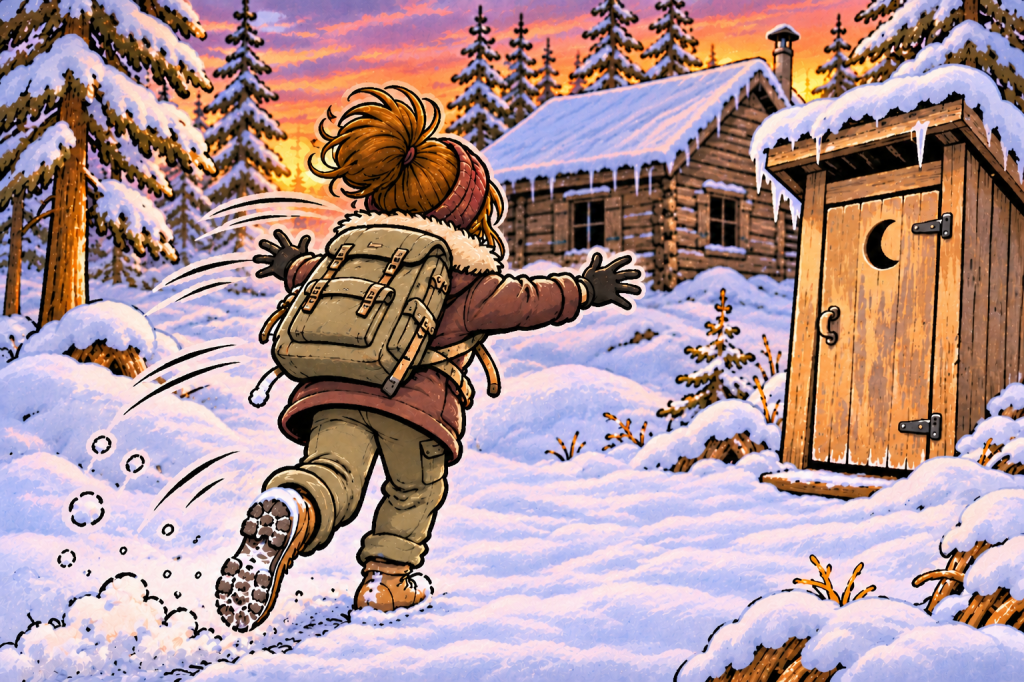
The temperature was dropping fast, and I needed to pee, so I took in the cabin’s historic features with particular appreciation. It had an outhouse about 30 feet away.
Which was very dark and very cold.
The cabin itself had a cast-iron stove. Heat, apparently, was something you had to negotiate with the stove by building a fire and then hoping it found the arrangement satisfactory.
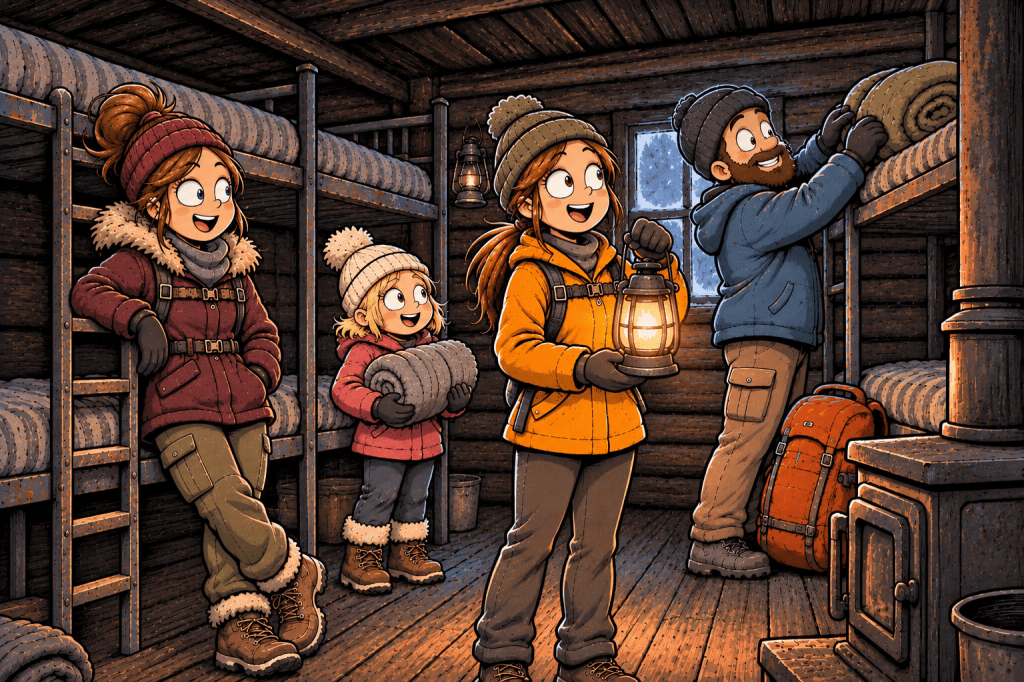
Maren went straight to work getting the fire going. We started preparing dinner: steak, eggs, and potatoes. It was an excellent meal, particularly under the circumstances.
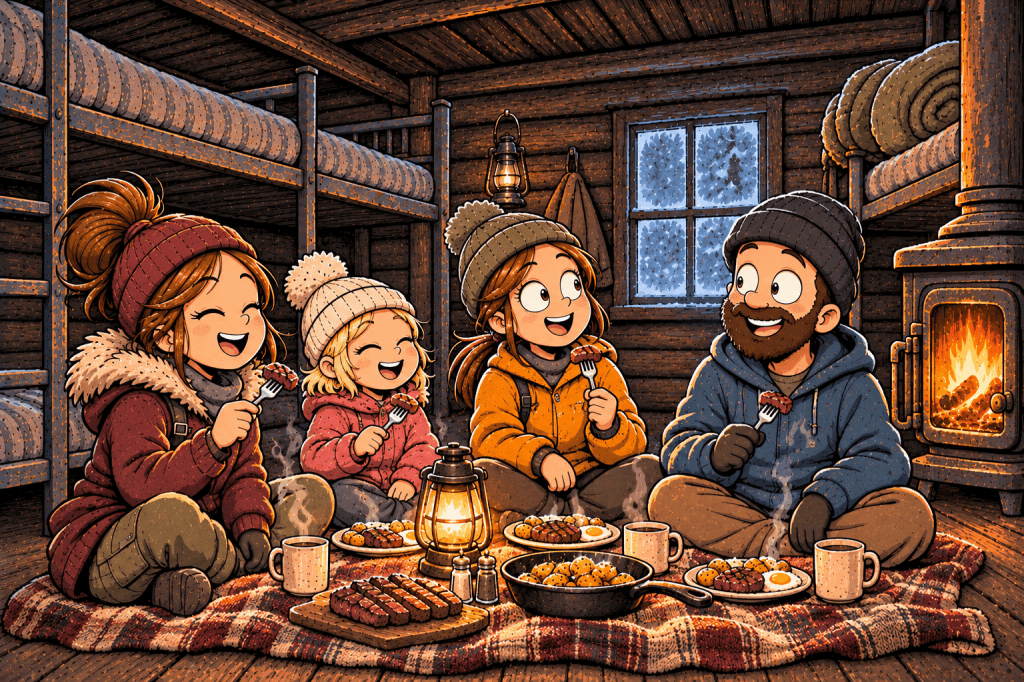
Outside, the temperature kept falling until it reached twenty below zero. Inside, the little stove made a brave attempt to heat the cabin and seemed to warm one or two square feet near itself quite well.
Chip and I helped entertain Maren’s daughter as we cleaned up dinner and huddled close for warmth. The cabin remained relatively cold. I began to think longingly of my sleeping bag, which was the only place I wanted to be and, ideally, the only place I wanted to remain until spring.
Along the walls were bunk beds with springs and mattresses that looked as if they had been selected by a prison committee. I took one of the bottom bunks. Chip took the top.
Maren held up a lantern and checked that everyone was ready for sleep.
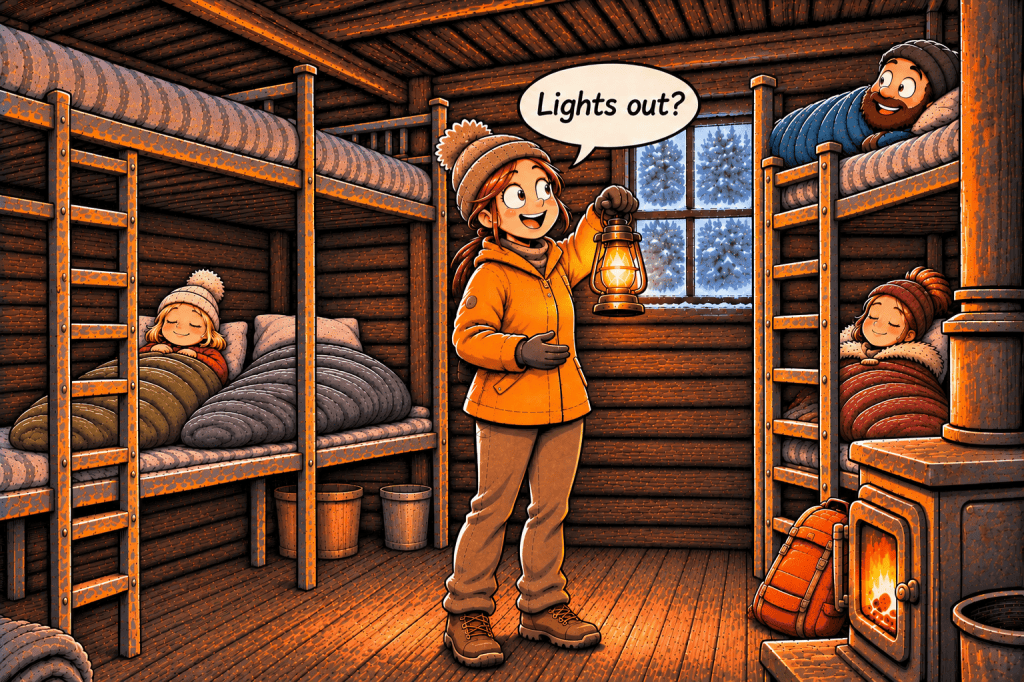
Then Chip said, “I’m going to throw up.”
Maren moved fast and grabbed a bowl.
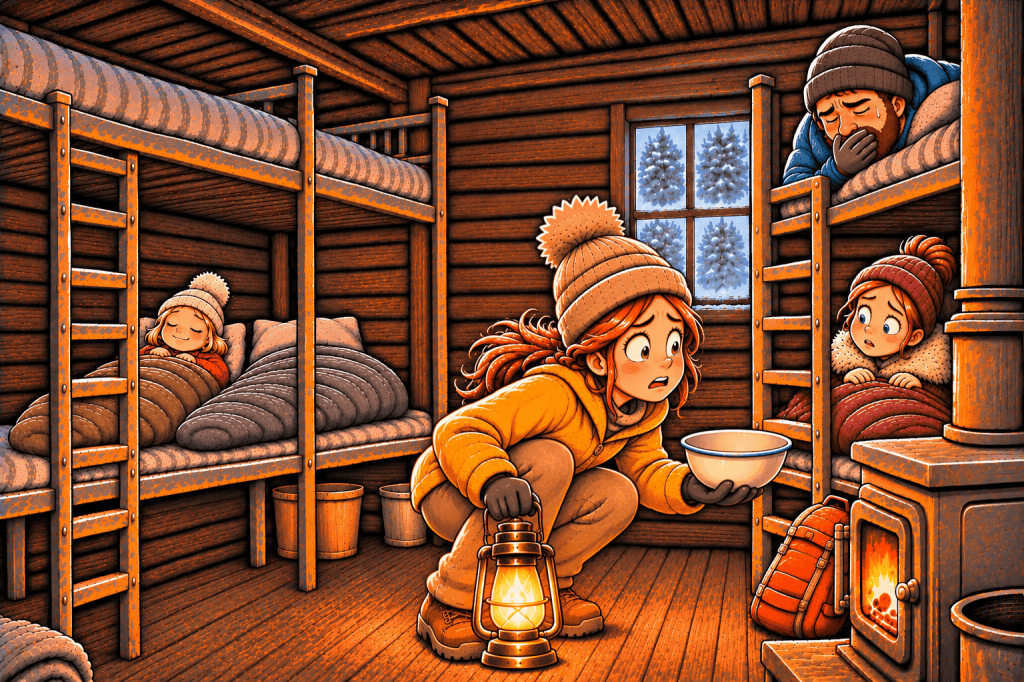
I will never forget watching her face descend into a twisted state of horror.
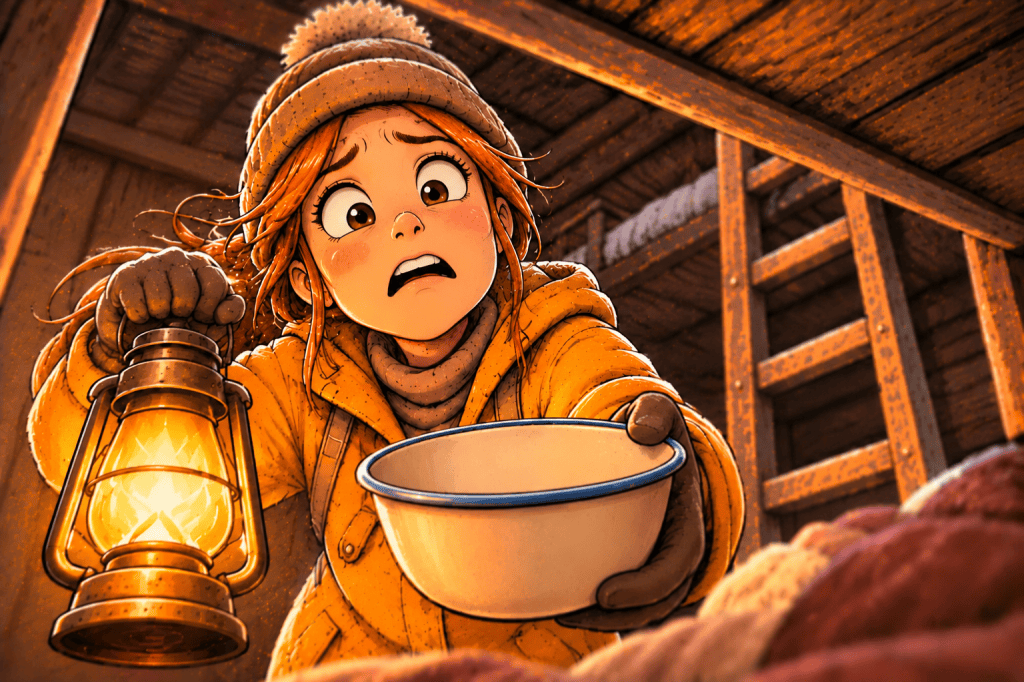
Her arm was fully extended. The bowl attempting to reach him. But it never made it.
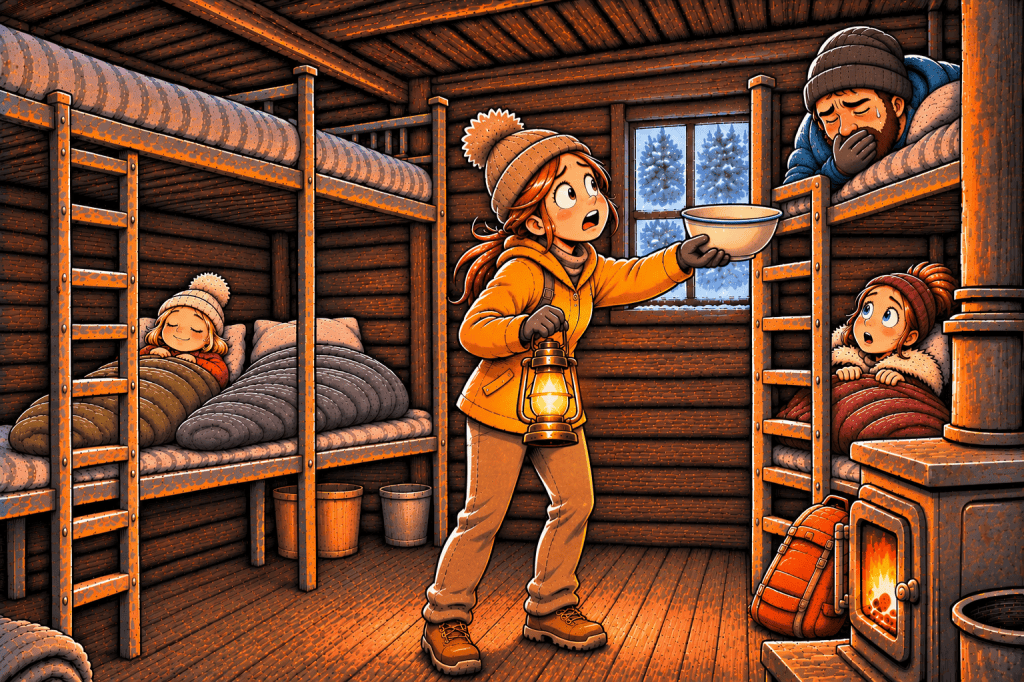
When I say it was a cascade, I mean it in the technical sense.
The vomit traveled all the way across the cabin and missed the bowl almost entirely.
It showered Maren.
It showered the beds.
It showered the floor.
It covered me.
It reached places in the cabin that had previously been considered outside the range of ordinary participation.
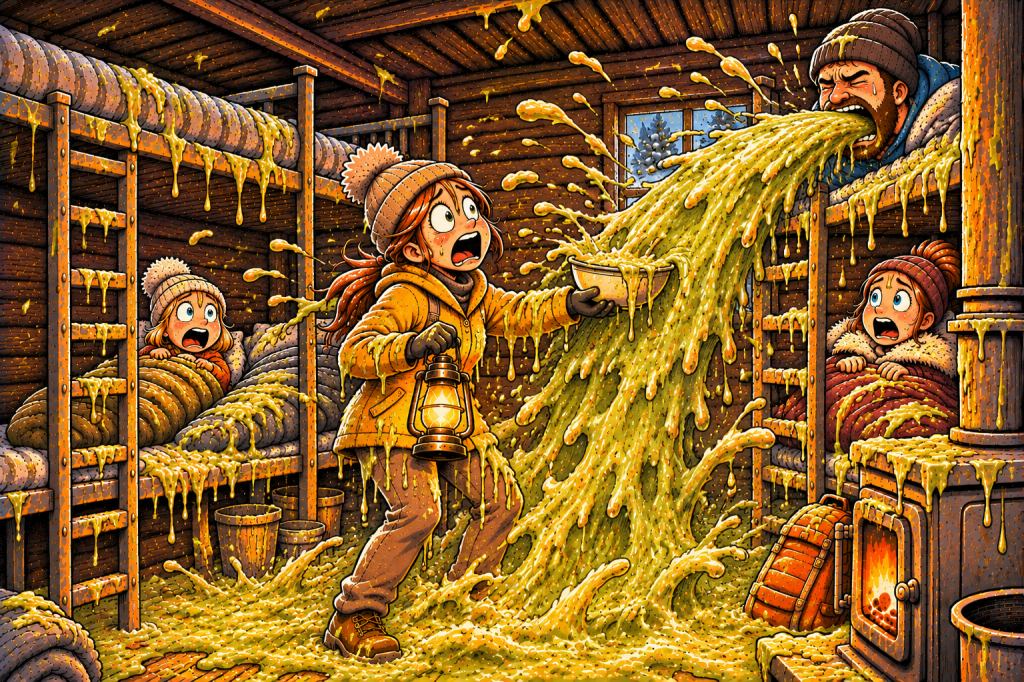
For one brief moment, everyone was silent.
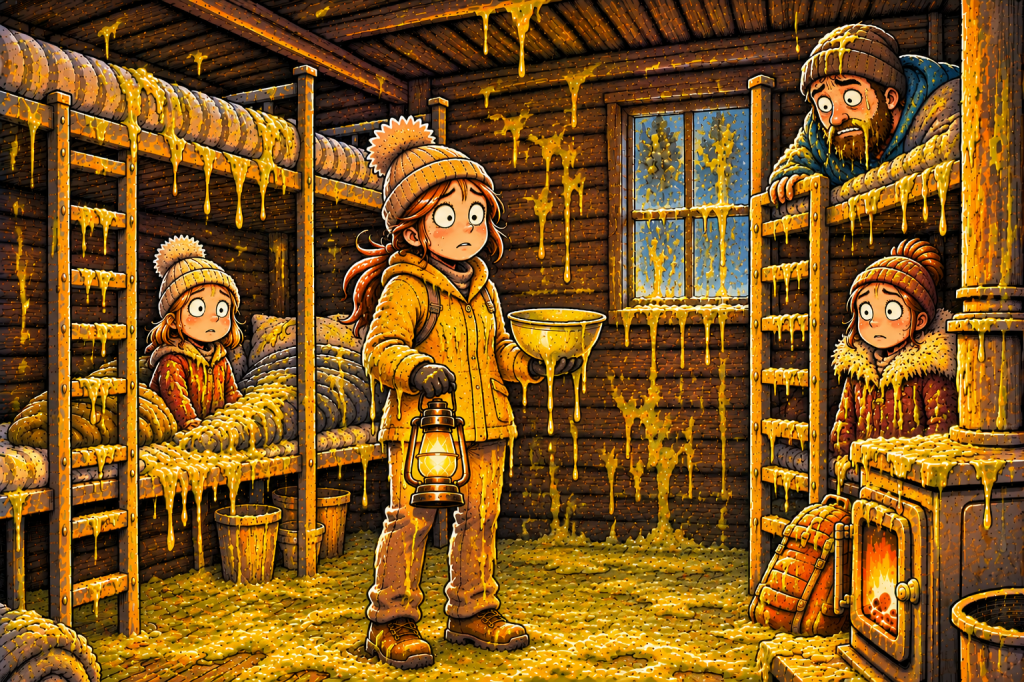
Then Maren said, “Well. Goodnight.”
She climbed into bed with her daughter and turned off the light.
I lay on the bottom bunk, cold, covered in vomit, and trying to process the fact that the cabin had somehow exploded.
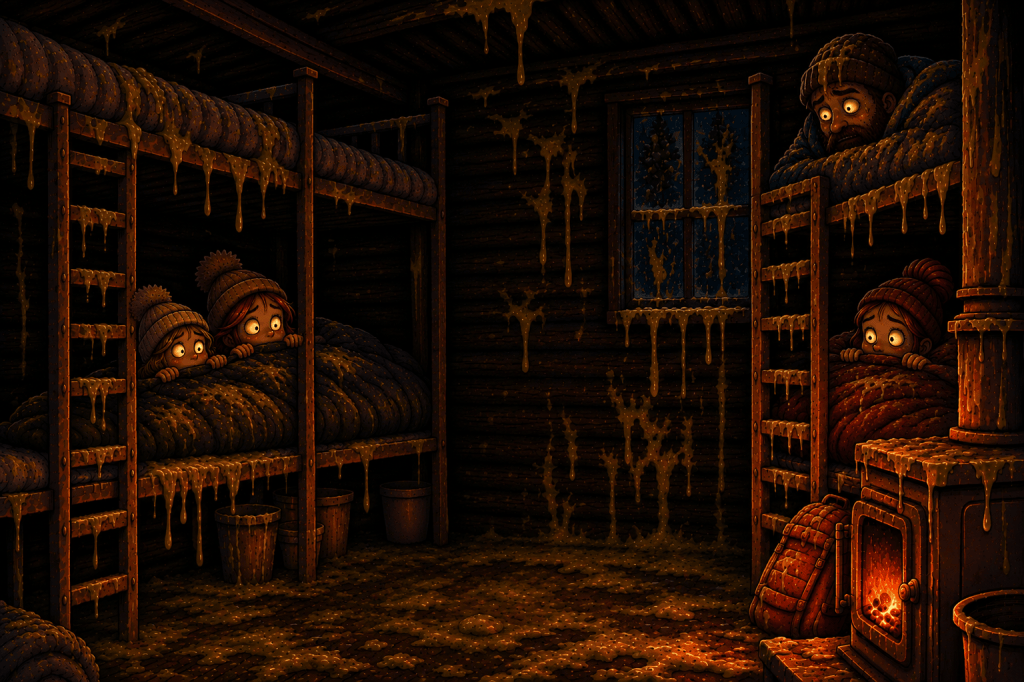
The smell was astonishing.
The temperature was appalling.
My sleeping bag had gone from desirable to spiritually necessary.
About thirty minutes later, in the dark, I heard Chip giggling quietly to himself from the top bunk.
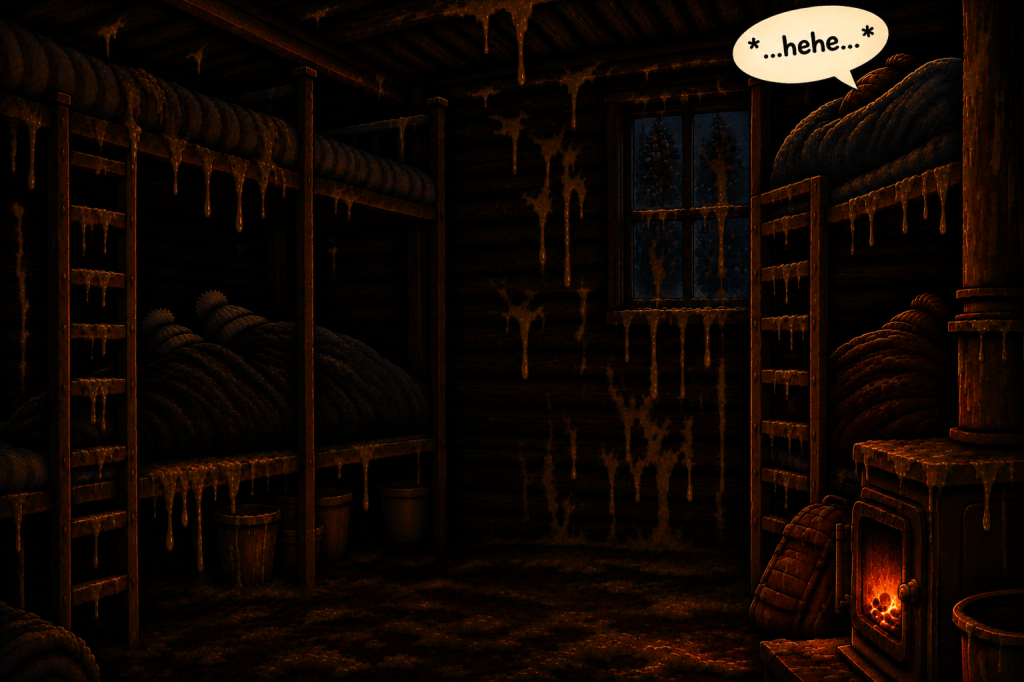
I’m fairly certain I did not sleep.
The night was long and cold and smelled like the worst decision any of us had ever made.
Dawn, when it finally arrived, was a welcome sight.
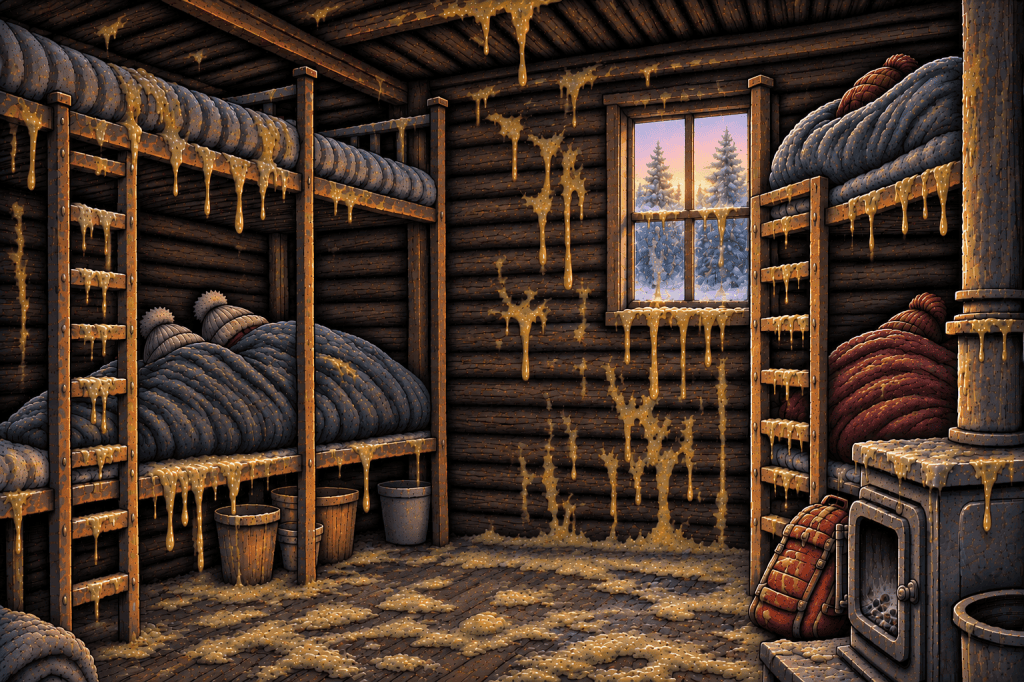
We got up and quietly cleaned the cabin as best we could.
There was limited discussion of the previous evening. The mess was simply there, and so were we, and the dust bin had become a strong member of the team.
It was still bitterly cold as we attempted to make breakfast.
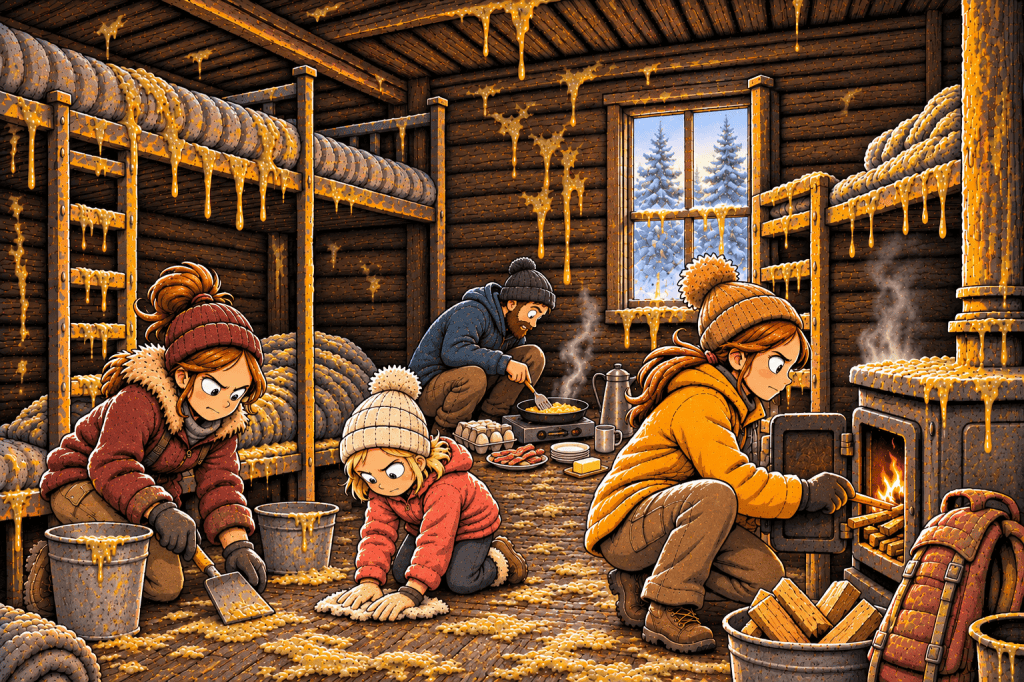
Maren’s daughter remained remarkably patient through the whole ordeal. The kid had been raised in Yellowstone after all and, to some degree, was accustomed to life presenting unexpected challenges in the form of extreme weather, wildlife, and Uncle Chip.
Then we packed up and trudged back toward civilization.
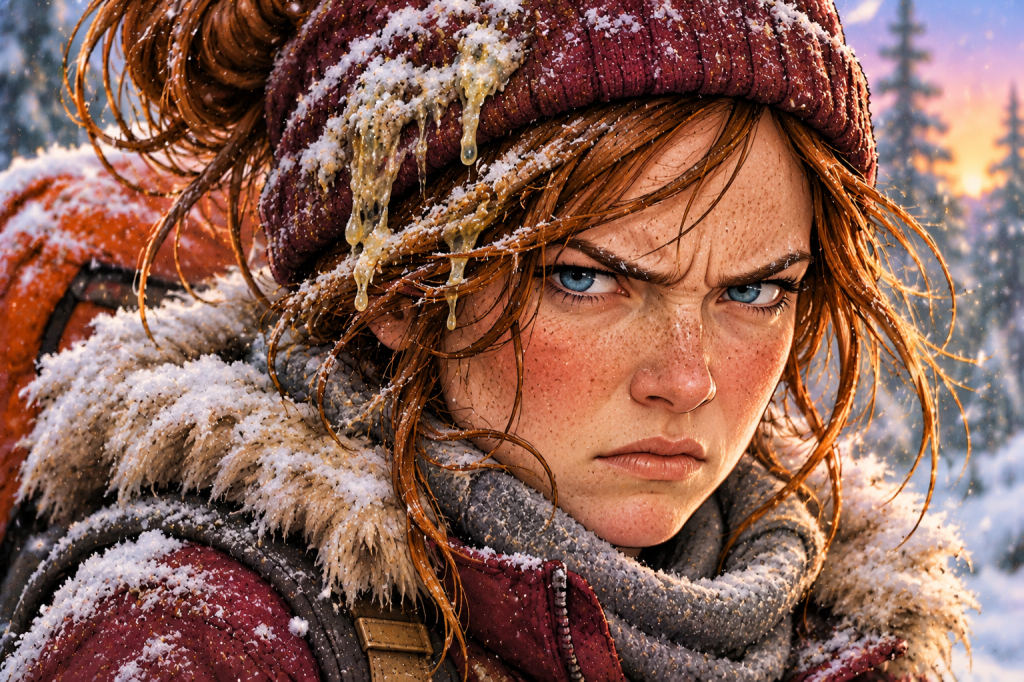
I had vomit frozen in my hair.
I have gone on many trips since then. I have slept in beds with proper mattresses. I have visited friends without hiking four miles through waist-high snow. I have eaten steak, eggs, and potatoes without having to consider whether the cabin might soon be classified as a crime scene.
But whenever someone says, “It’ll be fun,” I remember that backcountry patrol cabin in Yellowstone.
And I remember that four miles is not a distance.
It is a promise made by someone with a GPS and a four-year-old kid.